
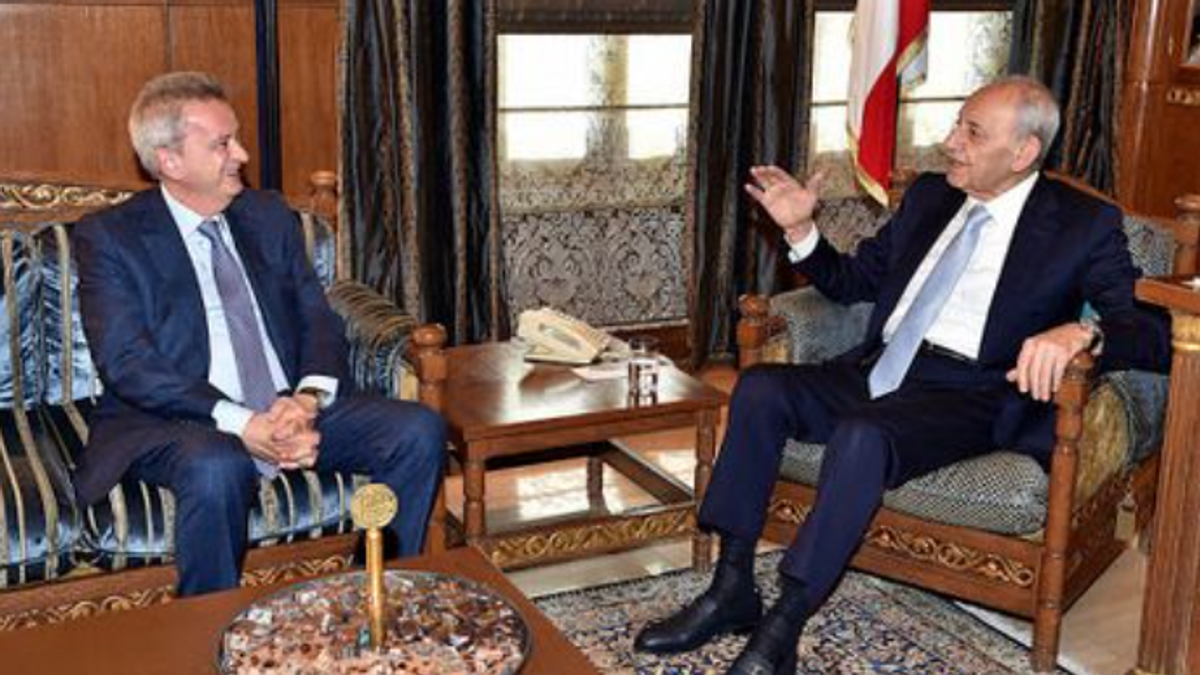
The $14 million bail of Riad Salameh, Lebanon’s disgraced central banker, should have been a moment of reckoning. Instead, it proved what most Lebanese already knew: in Beirut, even justice is for sale. Bags of cash bought him freedom, while politicians and judges bought themselves silence. The case exposes a judiciary not failing, but functioning exactly as designed—to shield the powerful, punish the weak, and keep Nabih Berri (the Speaker of the Lebanese Parliament and his mafia) corrupt order intact.
Salameh was once feted in Paris and Washington as the miracle worker of Beirut. For three decades, he ran Banque du Liban (Lebanon's Central Bank), praised for stability in a country otherwise defined by chaos. But beneath the surface, he presided over a financial edifice that resembled a Ponzi scheme, keeping dollars flowing in while politicians drained them out. When the system collapsed in 2019, ordinary Lebanese were locked out of their deposits, while the politically connected spirited their fortunes abroad.
International patience eventually snapped. In August 2023, the US Treasury sanctioned him under Executive Order 13441, accusing him of corrupt practices that “contributed to the breakdown of the rule of law in Lebanon.” For Washington, the message could not be clearer: Lebanon’s courts answer not to law, but to money and power.
If one man epitomizes Lebanon’s system, it is Nabih Berri, Speaker of Parliament for more than three decades. A warlord-turned-statesman, he has mastered the art of balancing sectarian spoils with political survival. Salameh has long been among his confidants.
Berri’s fingerprints are all over the outcome in Salameh’s case. Protecting Salameh was not loyalty but survival. For Berri knows that if Salameh ever spoke freely, the Speaker’s own empire of corruption could collapse overnight. Nabih Berri has been a central protector of Lebanon’s corrupt order for decades.
Salameh was the treasurer of the political class, the man who conjured dollars from thin air to finance decades of patronage. He knows which ministers parked fortunes in which Swiss accounts, which banks facilitated which transfers, and how the pyramid of “financial engineering” kept the system afloat. If compelled to talk, he could sink half the establishment. Better, then, to keep him comfortable — and quiet. For Salameh, the bail was more than freedom. It was a tacit bargain: silence in exchange for protection. As long as he keeps the secrets of the ruling class buried, the class will shield him.
If Washington and its partners are serious, they must widen the sanctions net. Riad Salameh is already designated. But Speaker Nabih Berri—the architect of Lebanon’s system of judicial and financial corruption—and the judges and lawyers enforcing his political order should be next. All of them facilitated corruption. If accountability is the goal, he cannot remain untouchable and has to go.
Share your thoughts