
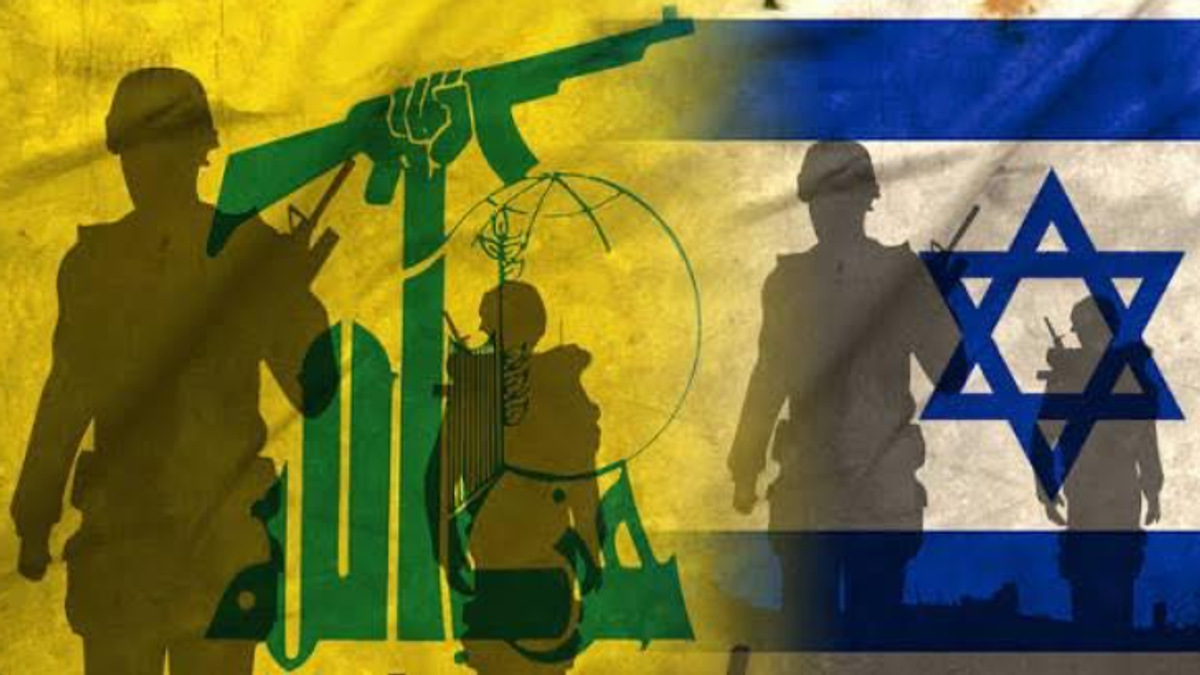
When the Lebanese were flooded with torrents of fiery promises and seismic threats, they were told that the Galilee was within reach of the Radwan units, that the ammonia tank in Haifa would be wiped out, and that the towers of Tel Aviv and the buildings of the Israeli prime minister’s office and Ministry of Defense would not withstand zero hour.
Minds were charged with the rhetoric of “deterrence” and “changing the rules of engagement,” as if the coming war would be a display of power rather than a test of survival. But the moment of truth came entirely opposite: no incursion, no strategic strikes, no images of victory—only the systematic assassination of first-, second-, and third-tier leaders, culminating in two secretaries-general, while the south was destroyed, the southern suburbs were laid bare, and one of the most devastating intelligence blows the party has suffered since its founding was exposed.
Everything said about readiness evaporated, and everything promoted about a “target bank” proved to be rhetoric for domestic consumption. The party that claimed to hold the initiative was exposed as incapable even of protecting its own leadership. Leaders were tracked, monitored, and assassinated with surgical precision, while the organization remained silent or contented itself with hollow, boilerplate statements that changed nothing in the balance of power. This is neither steadfastness nor strategic patience; it is blatant incapacity wrapped in empty slogans.
More dangerous than the military loss is the pathological denial—denial of defeat, denial of the breach, denial of the human and material cost—as if the party chose to flee forward rather than confront the bitter truth. The south, said to be the first line of defense, was left alone under fire; the suburbs, said to be fortified, turned into an open arena; and the constituency driven into war in the name of “divine victory” is today left to count its staggering losses without acknowledgment or accountability.
Despite all this, Hezbollah stubbornly continues to refuse to hand over its weapons, at a time when Israel is closer than ever to delivering a decisive strike that may leave little of its military structure beyond the name. It refuses because it is unwilling to acknowledge defeat, or because it does not want to relinquish a weapon that is no longer an instrument of resistance but has become a tool of internal power and political blackmail.
A weapon that neither deterred war, nor prevented assassinations, nor protected land or people—yet is still used to paralyze the state, confiscate its decision-making, and control the fate of the Lebanese.
The Lebanese state, meanwhile, appears as either a witness for the prosecution or a silent hostage. Incapable of disarming the weapons, incapable of imposing its sovereignty, incapable even of protecting its citizens from the consequences of suicidal adventures they did not choose. The president has changed, but the tragic reality has not; faces have changed, yet the country remains hostage to an armed organization that acts as if it stands above the state, above the people, and above any accountability or law. No war is decided in the Council of Ministers, no peace debated in institutions; rather, fateful decisions are taken in closed rooms and imposed on millions of Lebanese by brute force.
This party has never asked about Lebanon’s interests and never will. Its project is transnational, and its weapon is not meant to defend the state but to keep it weak, broken, and humiliated used when needed and disabled when danger arises. And when the blatant lies are exposed and hollow myths collapse, people are asked for eternal silence, victims for endless patience, and the state for shameful complicity.
The harsh truth is that Lebanon is not being destroyed because it is weak, but because it is kidnapped and violated—kidnapped by a weapon that is beyond accountability, by an ideological discourse that justifies abject failure as victory, and by a political class that is either powerless, afraid, or complicit. Unless this destructive reality is broken and sovereign decision-making restored, everything we have heard about “deterrence” and “dignity” will remain an empty illusion, while the country is pushed time and again to the edge of collective suicide in the name of a cause that never resembled Lebanon or the Lebanese.