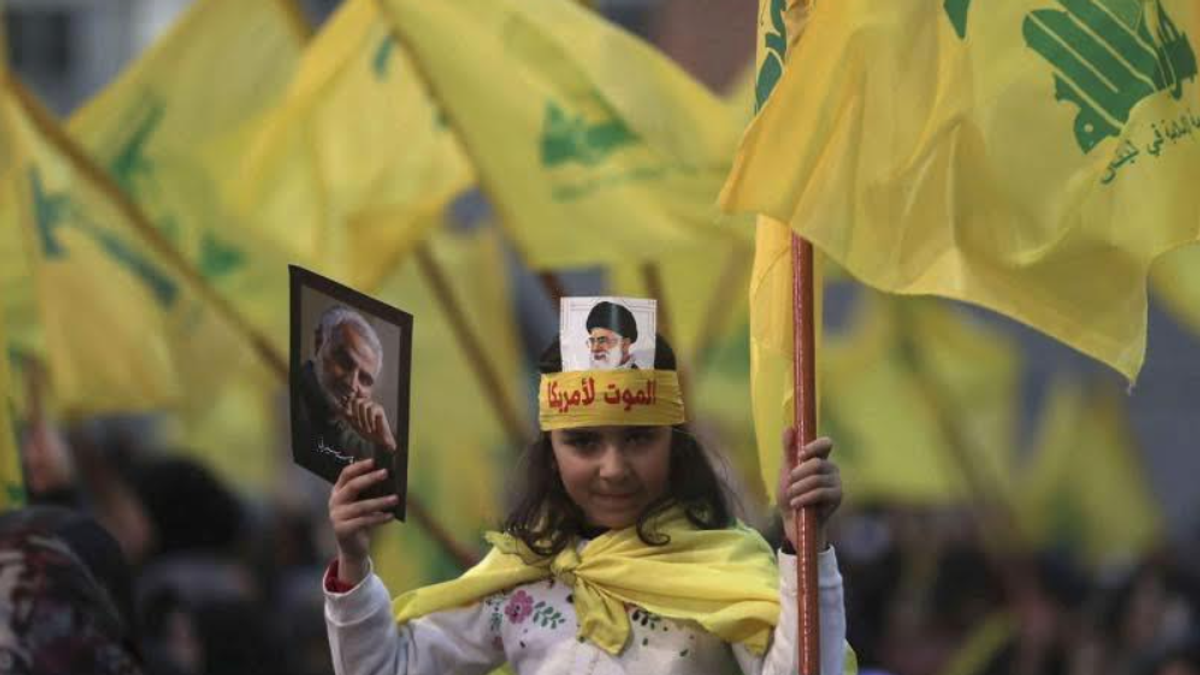
When Lebanese people speak of the danger posed by Hezbollah, many immediately think of its military arsenal and missiles deployed outside the authority of the state. But there is another danger—deeper and longer-lasting—that cannot be seen with the naked eye nor heard on battlefields. It is planted silently in the minds of generations: the “Al-Mahdi” schools.
These schools, run under the direct supervision of Hezbollah-affiliated institutions, do not limit themselves to teaching the official curriculum. They integrate it with religious-political ideological content aimed at shaping a child’s consciousness from early childhood, based on intellectual foundations tied to Wilayat al-Faqih and a transnational Iranian agenda.
The result is that a child grows up as a member of a specific ideological project, taught that his highest loyalty is not to the nation, but to a religious leader outside Lebanon, and that “jihad” is not merely a spiritual concept but a realistic option and a life goal.
Diverse societies like Lebanon are built on the values of coexistence and draw their strength from the convergence of their components. But when a segment of the population is raised on a doctrine that sees itself as “Hezbollah before being Lebanon,” it grows up with a psychological separation from the rest of its fellow citizens.
This separation produces a generation that is difficult to integrate into a unified national project, because it holds a political and religious vision that fundamentally contradicts the idea of a unifying civil state.
Weapons can be confiscated or neutralized if there is a political decision or international pressure. But ideological weapons, once planted in minds from childhood, become part of personal identity and are difficult to change or correct. Here lies the real danger: we are facing a long-term project that guarantees Hezbollah the continuity of its influence even if its military weapons were to be lost one day.