In the evolving security architecture of the Middle East, the Lebanese Armed Forces (LAF) has transitioned from a local security actor into a strategic pillar of U.S. Central Command (CENTCOM). For Washington, the LAF is not merely a recipient of aid; it is the “sole legitimate defender” of Lebanese sovereignty and a vital counter-terrorism partner. However, this partnership now faces an existential threat from within. The systematic infiltration of the army by pro-Assad and Hezbollah-aligned elements is no longer a localized concern—it is a U.S. top security issue that threatens to turn billions in American taxpayer investment into a strategic asset for the “Axis of Resistance.”
The Investment: Support by the Numbers
The U.S. commitment to the LAF is unprecedented in its scale and consistency. Since 2006, the United States has invested over $3 billion in security assistance to Lebanon. The numbers for 2024–2025 reflect an accelerating dependence:
• Foreign Military Financing (FMF): In 2024 alone, FMF commitments stood at $132.9 million, providing the LAF with 85% of its modern equipment.
• IMET (Training): Since 1970, the U.S. has spent approximately $3 million annually to train over 6,000 Lebanese officers, aiming to instill a culture of institutional loyalty.
• Livelihood Support: To prevent a total collapse during the economic crisis, the U.S. launched a $72 million “salary supplement” program in 2023, effectively paying the monthly wages of Lebanese soldiers to ensure they remain at their posts rather than defecting to militias.
In October 2025, CENTCOM Commander Gen. Brad Cooper praised the LAF for its role in the “disarmament of unauthorized weapons,” signaling that the army is now considered a frontline operational partner in the U.S. regional strategy.
The Breach: The Shadow of “Unit 900”
The primary threat to this multi-billion-dollar partnership is the clandestine influence of Hezbollah’s Unit 900 (also known as Group 900). Functioning as a “secret police” and counter-intelligence apparatus, Unit 900 has successfully compromised the LAF’s internal security. Recent intelligence reports (2025) have exposed a “revolving door” of information between the army and Hezbollah:
• Intelligence Leaks: In January 2025, it was revealed that Brig. Gen. Suhil Bahij Gharb, the head of military intelligence for southern Lebanon, allegedly leaked sensitive movements from the joint U.S.-UN-French control room directly to Hezbollah operatives.
• Operational Sabotage: Senior officers such as Maher Raad (formerly of the Dahiyeh Intelligence Directorate) have been linked to active smuggling cooperation with Hezbollah officials, effectively neutralizing the army’s ability to interdict illicit Iranian cargo.
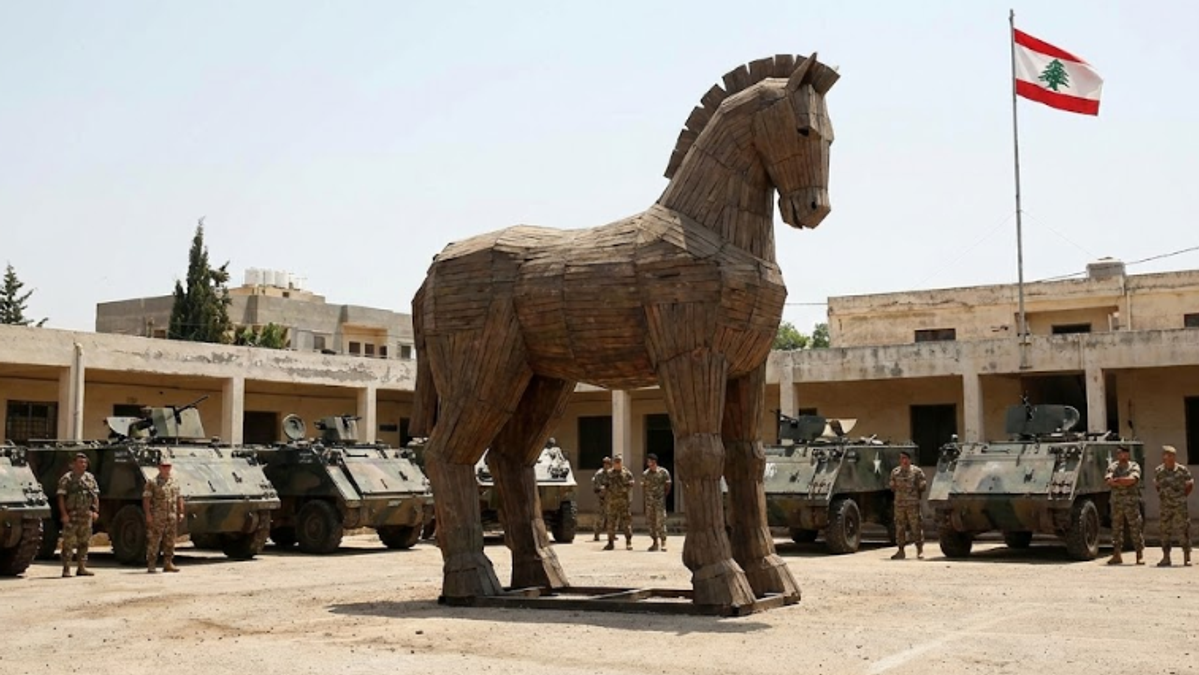
The Political Trojan Horse: Aounists and the SSNP
The infiltration is not limited to Hezbollah. Pro-Assad elements from the Syrian Social Nationalist Party (SSNP) and loyalists to the Aounist (FPM) faction occupy sensitive positions within the command structure. For these officers, loyalty is divided between the Lebanese state and the regional “Axis.”
Conclusion: A Mandate for Vetting
The United States can no longer afford to view the LAF through the lens of “institutional neutrality.” If the LAF is to remain a part of the CENTCOM framework, it must undergo a radical, transparent vetting process. The presence of a single “Unit 900” collaborator in a senior position makes every Humvee, drone, and intelligence brief provided by the U.S. a direct threat to U.S. interests. Washington must demand the immediate discharge of all officers with documented ties to Hezbollah, the SSNP, or the Aounist leadership. Failure to do so will mean that the U.S. is not building an army for Lebanon, but inadvertently subsidizing the military intelligence of its greatest enemies.