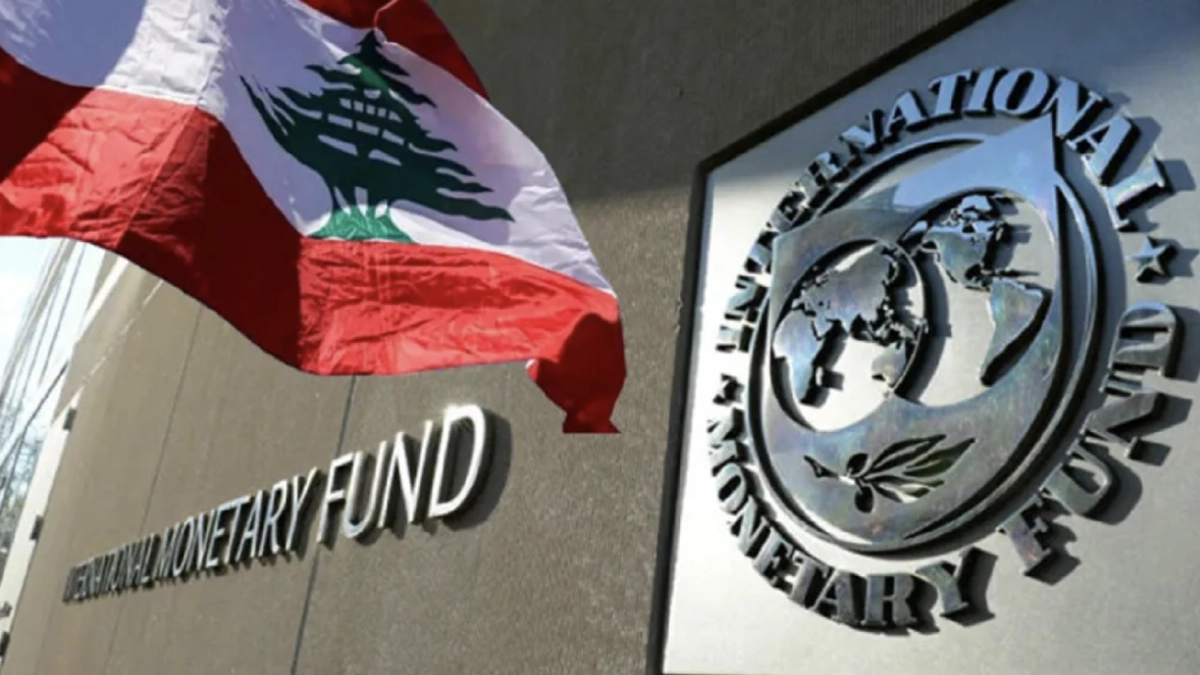
Lebanon's financial collapse is widely described by the International Monetary Fund (IMF) and other international institutions as a systemic crisis. While this characterization accurately captures the breadth of the collapse, it does not fully explain how the crisis evolved over time. This paper argues that Lebanon's experience reveals an important distinction between systemic consequences and systemic origins. Using the interconnected balance sheets of households, firms, and government as an analytical framework, the paper examines how financial distress spread across the broader economy and ultimately impaired the country's entire financial architecture.
Drawing on the International Monetary Fund's systemic crisis framework and insights from the Bank for International Settlements (BIS) on financial crises and liquidity cycles, the paper advances a central proposition: the prolonged delay in recognizing and allocating losses transformed time itself into an implicit adjustment mechanism. Rather than resolving insolvency through transparent restructuring, a significant portion of the adjustment occurred through inflation, currency depreciation, financial repression, and the erosion of purchasing power. As a result, losses migrated gradually from institutions to society, particularly to depositors, wage earners, pensioners, and the middle class.
The paper further argues that forensic auditing remains relevant despite the passage of time, not primarily as a tool for reversing losses but as an instrument of institutional learning, accountability, and national memory. The broader lesson is that systemic crises are shaped not only by the decisions that create them but also by the decisions that fail to resolve them. Lebanon's experience demonstrates how prolonged delay can become a powerful economic force, redistributing losses while obscuring responsibility and complicating recovery.
Introduction
Since the onset of Lebanon's financial collapse in 2019, policymakers, economists, international institutions, and the Lebanese public have struggled to answer a deceptively simple question: what exactly happened? Was Lebanon facing a banking crisis, a sovereign debt crisis, a currency crisis, a governance crisis, or some combination of all four? Over time, one description increasingly emerged as the dominant framework. The International Monetary Fund (IMF), the World Bank, and many international observers came to characterize Lebanon's collapse as a systemic crisis. The term has since become widely accepted in policy discussions, reform proposals, and economic analyses. Yet while the description is frequently used, its implications are rarely examined in depth.
The IMF's diagnosis is important because labels matter. They influence how losses are measured, how solutions are designed, how responsibilities are allocated, and how history ultimately remembers a crisis. The designation of Lebanon's collapse as systemic helped justify the need for comprehensive reforms encompassing public finances, the banking sector, Banque du Liban (BDL), governance structures, and state institutions. In many respects, the diagnosis was accurate. Few modern economic collapses have simultaneously affected banks, sovereign finances, the currency, household wealth, public services, investment, employment, and social stability to the extent witnessed in Lebanon.
However, an important distinction often disappears once the term "systemic" enters public discourse. A crisis may become systemic in its consequences without necessarily being systemic in its origins. The difference is not semantic. It lies at the heart of accountability, reform, and the search for a sustainable recovery.
I argue that while Lebanon's crisis undeniably became systemic in its effects, its evolution was profoundly shaped by policy choices made before and after the collapse. More importantly, the prolonged delay in addressing losses transformed the nature of the crisis itself. Time ceased to be a neutral variable and became an instrument through which losses were gradually redistributed across society.
The IMF's Systemic Crisis Framework
From the IMF's perspective, a systemic crisis exists when financial distress threatens the functioning of the broader economic system rather than a single institution or sector. In such situations, traditional market mechanisms are unable to restore stability without significant intervention. By the time IMF teams began engaging intensively with Lebanon after the 2019 collapse, the country exhibited nearly every characteristic of a systemic crisis. The banking sector had become effectively insolvent. Sovereign debt had become unsustainable, culminating in Lebanon's historic Eurobond default in March 2020. The exchange rate regime had collapsed. Confidence in financial institutions had evaporated. Economic output contracted dramatically. Poverty surged. Capital controls emerged informally without a legal framework. Public services deteriorated. Emigration accelerated.
Viewed through this lens, the IMF's conclusion was difficult to dispute. The crisis had spread far beyond the balance sheets of individual banks. It had become a crisis of the entire economic system.
A useful way to understand this transformation is through the interaction of three interconnected balance sheets: the household balance sheet, the firm balance sheet, and the government balance sheet. Under normal circumstances, these balance sheets reinforce one another. Households save and deposit the surplus of funds in banks. Banks intermediate those savings and provide financing to firms. Firms invest, create employment, generate income, and pay taxes. Governments provide public services, establish regulatory frameworks, and maintain the institutional credibility upon which financial systems depend. Stability emerges not from the strength of any single balance sheet, but from the alignment of all three.
In Lebanon, that alignment gradually broke down. What initially appeared to be a banking sector problem soon revealed itself as a sovereign debt problem. The sovereign debt problem, in turn, evolved into a monetary and currency crisis. As confidence deteriorated, the effects spread across every layer of economic activity. Household balance sheets were devastated as deposits became inaccessible, inflation eroded purchasing power, and wages collapsed in real terms. Firm balance sheets deteriorated as access to credit disappeared, working capital became scarce, investment horizons shortened, and economic uncertainty intensified. Government balance sheets weakened further as revenues declined, public services deteriorated, debt sustainability vanished, and the state's capacity to act as a credible backstop diminished.
The result was a self-reinforcing cycle of financial contagion across balance sheets. Weak household finances reduced consumption and confidence. Struggling firms generated less income, employment, and tax revenue. Fiscal weakness undermined monetary stability and further eroded confidence in the financial system. Each balance sheet transmitted stress to the others. What began as distress within specific institutions evolved into a generalized breakdown of financial intermediation, economic governance, and social trust.
This is precisely what distinguishes a systemic crisis from a sectoral one. A sectoral crisis remains largely confined to a particular institution or market. A systemic crisis occurs when failures propagate across interconnected balance sheets, rendering isolated solutions ineffective. By the time the IMF characterized Lebanon's collapse as systemic, the crisis had already migrated from banks to households, from households to firms, and from firms to the state. The entire financial architecture had become impaired.
The IMF's diagnosis also carried an important policy implication: partial solutions would not work. Recapitalizing banks without addressing sovereign insolvency would fail. Stabilizing the exchange rate without fiscal reform would fail. Reforming public finances without restructuring the banking sector would fail. The crisis required a comprehensive approach because the weaknesses had become deeply interconnected.
In this sense, the IMF's systemic characterization was not merely descriptive. It was also prescriptive. It justified the need for a broad reform agenda encompassing fiscal adjustment, banking sector restructuring, central bank reform, governance improvements, anti-corruption measures, and institutional rebuilding.
The Missing Distinction: Consequences Versus Causes
While the IMF's diagnosis accurately described the condition of the Lebanese economy, it did not necessarily resolve the question of responsibility. A systemic outcome does not automatically imply a systemic origin. The collapse undoubtedly affected society as a whole. Depositors lost access to savings, employees saw wages collapse in real terms, businesses struggled to survive, and public services deteriorated. However, the authority to make monetary policy, supervise banks, manage public finances, and regulate the financial system was not distributed equally across society. A distinction must therefore be made between a crisis whose effects became universal and a crisis whose origins were concentrated within specific decision-making institutions.
This distinction matters because systemic labels can sometimes unintentionally blur accountability. When everyone suffers, it becomes tempting to suggest that everyone somehow contributed equally to the outcome. Such reasoning risks confusing exposure with responsibility. The fact that an entire society bears the consequences of a crisis does not mean that responsibility for its creation was equally shared across that society.
When the Music Stopped: The Political Economy of Time
The Bank for International Settlements (BIS), reflecting on the Global Financial Crisis of 2008, popularized a powerful metaphor for understanding financial collapses. During periods of abundant liquidity, rising asset prices, expanding credit, and strong confidence, risks often remain hidden. Balance sheets appear healthy, economic actors continue to borrow, lend, and invest, and the system functions smoothly as long as liquidity continues to flow. In the language of financial markets, the music keeps playing.
The problem emerges when the music stops. Liquidity evaporates, funding becomes scarce, asset prices adjust, and institutions that appeared solvent reveal underlying weaknesses. The end of the music does not necessarily create the crisis; rather, it exposes vulnerabilities that were already embedded within the financial system.
Lebanon's experience shares important similarities with this framework. For years, the country's financial model relied on continuous inflows of foreign currency, expanding public debt, growing banking sector exposure to the sovereign, and confidence in a de facto fixed exchange-rate regime maintained by Banque du Liban (BDL). As long as fresh inflows continued, the system appeared sustainable. The vulnerabilities were visible to some observers but were largely masked by abundant liquidity, financial engineering, and confidence in the system's ability to perpetuate itself. The apparent stability of the model depended less on its underlying fundamentals than on the uninterrupted continuation of external inflows.
By 2019, however, the music had effectively stopped. Foreign currency inflows slowed dramatically, confidence weakened, and the banking sector's exposure to the sovereign became increasingly difficult to sustain. Depositors sought access to their funds (run-on-deposits), the exchange-rate regime came under severe pressure, and losses that had accumulated over many years gradually became visible.
Yet Lebanon differs from the standard BIS narrative in one critical respect. In most financial crises, the moment the music stops is followed by a process of loss recognition, restructuring, recapitalization, and adjustment. Insolvent institutions are restructured, shareholders absorb losses, creditors are ranked according to established legal hierarchies, and governments negotiate stabilization programs. The economic pain may be severe, but the adjustment process begins.
Lebanon followed a different path. The music stopped, but the adjustment process never fully began: losses remained disputed, banking sector restructuring was repeatedly delayed, fiscal reforms stalled, capital controls remained informal, and recovery plans were proposed and abandoned. Moreover, insolvency was acknowledged rhetorically but rarely addressed operationally. Rather than confronting losses directly and allocating them transparently, the country entered a prolonged period of policy paralysis.
This is where time emerged as a central variable in the crisis. Financial crises are not static events. Their economic and social consequences depend not only on how they begin but also on how long they are allowed to persist without resolution: every year without restructuring altered balance sheets; every year of inflation redistributed wealth; and every year of currency depreciation changed the real value of claims and obligations. Deposits trapped within the financial system lost much of their economic value. Public-sector wages collapsed in real terms. Household savings were progressively depleted. Businesses adjusted by downsizing, informalizing, or exiting altogether.
The financial gap did not narrow because wealth was created, productivity increased, investment recovered, or reforms succeeded. Nor did it shrink because losses were transparently recognized and allocated according to a coherent restructuring framework. It narrowed, in part, because society itself became the shock absorber of last resort. Inflation reduced the real value of liabilities. Currency depreciation eroded the purchasing power of wages, pensions, and savings. Financial repression restricted access to deposits and limited the ability of households to protect accumulated wealth. As the years passed, the economic value of claims trapped within the financial system steadily diminished. The adjustment occurred not through growth, but through erosion.
This distinction is critical. In a conventional restructuring process, losses are identified, quantified, and allocated through explicit legal, financial, and political decisions. Shareholders absorb losses. Creditors are ranked according to established hierarchies. Governments negotiate stabilization programs and recapitalization strategies. The burden of adjustment is visible, debated, and ultimately assigned. Lebanon followed a different path. Rather than allocating losses through formal restructuring, a significant portion of the adjustment occurred through the passage of time itself.
Inflation functioned as an implicit haircut. Currency depreciation became an instrument of balance-sheet adjustment. Restrictions on withdrawals transformed liquidity into a scarce and discounted asset. Every year of delay altered the real value of assets and liabilities. Every year without resolution redistributed wealth. Every year without restructuring changed the effective burden borne by different segments of society. What could not be achieved politically through explicit decisions gradually occurred economically through monetary erosion.
In this sense, time became a de facto loss-allocation mechanism. Not because policymakers formally adopted such a strategy, but because prolonged inaction produced highly predictable outcomes. Delay ceased to be a neutral condition and became an economic force in its own right. The burden of adjustment migrated steadily from institutions to society, from balance sheets to households, and from explicit restructuring to implicit impoverishment. Depositors, wage earners, pensioners, and the middle class gradually absorbed losses that had never been formally assigned to them.
The political significance of this process should not be underestimated. Explicit restructuring requires policymakers to confront difficult questions: Who bears the losses? In what order? Under what legal authority? Delay avoids the responsibilities of finding answers to these questions without eliminating them. It obscures the distribution of losses while allowing the redistribution to occur nonetheless. The result is a form of adjustment that is less transparent, less accountable, and often more regressive than formal restructuring. From an accounting perspective, liabilities become less burdensome in real terms. From a societal perspective, however, the adjustment is financed through declining living standards, shrinking purchasing power, depleted savings, and the gradual erosion of the middle class.
Viewed through this lens, Lebanon's experience offers a broader lesson for the study of systemic crises. Financial crises are not defined solely by the magnitude of losses, but also by the mechanisms through which those losses are distributed. In Lebanon, the most consequential restructuring tool was never formally announced; it was time itself.
The IMF's characterization of Lebanon's collapse as a systemic crisis explains the breadth of the damage across households, firms, banks, and government. The Lebanese experience adds another dimension to that analysis. It demonstrates that once a crisis becomes systemic, the failure to recognize and allocate losses can transform time itself into an instrument of adjustment. The question is therefore no longer what happens when the music stops. The more relevant question is what happens when the music has stopped, yet the authorities refuse to leave the dance floor.
The Role of Forensic Auditing
This evolution raises an important question regarding the recently resurfaced debate on forensic auditing. After years of delay, can forensic auditing still serve a useful purpose? The answer is yes, although its role has changed. In the early stages of the crisis, forensic auditing might have contributed to stopping the bleeding, identifying irregularities, recovering assets where possible, strengthening accountability, and restoring confidence in public institutions. Today, much of the financial damage has already occurred. Assets have moved. Values have changed. Economic realities have shifted. The crisis has evolved. Yet forensic auditing remains essential for a different reason.
Modern states require institutional memory. Recovery depends not only on financial restructuring but also on understanding how failures occurred, how risks accumulated, and how warning signs were ignored or dismissed. Without a credible reconstruction of events, future reforms risk addressing symptoms rather than causes. Policymakers may redesign institutions without fully understanding why those institutions failed in the first place. The purpose of forensic auditing today is therefore less about reversing the collapse and more about understanding it, documenting it, and ensuring that future generations do not repeat it.
This is particularly important in Lebanon because the crisis was not the result of a single event, policy decision, or institution. It emerged from years of interaction between public finances, monetary policy, banking sector practices, regulatory oversight, and political decision-making. Understanding how these factors interacted requires more than identifying individual transactions or isolated irregularities. It requires reconstructing the sequence of decisions that transformed vulnerabilities into systemic fragilities and, eventually, into a full-scale collapse.
Forensic auditing can therefore serve as a bridge between financial reconstruction and institutional accountability. It can help establish a factual record of what occurred, when key decisions were made, what information was available to decision-makers, and how losses evolved over time. Such an exercise cannot undo the losses already suffered, but it can help distinguish between unavoidable consequences, policy mistakes, governance failures, and potential misconduct. This distinction is essential if accountability is to extend beyond political narratives and competing interpretations.
Questions regarding decision-making, regulatory oversight, loss recognition, governance failures, conflicts of interest, fiduciary responsibilities, and institutional accountability remain central to any serious recovery process. The value of forensic auditing today lies less in recovering losses than in establishing a credible historical record of how the crisis evolved. In a crisis where delay repeatedly obscured responsibilities and redistributed losses over time, establishing an objective historical record may be one of the most important contributions forensic auditing can still make.
Ultimately, countries recover not only by repairing balance sheets but also by learning from failure. Financial restructuring can restore solvency. Economic reforms can restore stability. But only a credible understanding of how the crisis unfolded can help restore trust. In that sense, forensic auditing remains less a tool of financial recovery than a tool of institutional learning and national memory.
Conclusion
The IMF was correct to describe Lebanon's crisis as systemic. By any objective measure, the collapse spread across virtually every component of the country's economic, financial, and social architecture. Household balance sheets were impaired. Firms lost access to finance and investment capacity. Government credibility deteriorated. The crisis propagated across the interconnected balance sheets that underpin every functioning economy. In that sense, the IMF's diagnosis was both accurate and necessary.
Yet the systemic nature of the outcome should not obscure the complexity of the process that produced it. Lebanon's experience demonstrates that crises are not defined solely by their origins, nor solely by the magnitude of their consequences. They are also shaped by the decisions that fail to resolve them. The country's collapse did not become systemic overnight. It evolved over time as losses remained unrecognized, restructuring was repeatedly postponed, and policy paralysis allowed economic deterioration to spread throughout society.
The BIS metaphor reminds us that financial vulnerabilities often become visible when the music stops. Lebanon's experience adds a further lesson. The most consequential phase of the crisis began after the music had already stopped. Rather than moving from recognition to resolution, the country entered a prolonged period during which time itself became part of the adjustment process. Inflation, currency depreciation, financial repression, and delayed restructuring gradually redistributed losses across society. What was not allocated explicitly through policy was allocated implicitly through erosion.
This is perhaps the paper's central insight. The financial gap did not narrow primarily because reforms succeeded, productivity increased, or wealth was created. It narrowed, in part, because households, wage earners, pensioners, and depositors absorbed an increasing share of the adjustment. Delay became more than a consequence of political dysfunction; it became a mechanism through which losses were redistributed and accountability became more difficult to establish.
This is why forensic auditing remains relevant even today. Recovery requires more than repairing balance sheets. It requires understanding how vulnerabilities accumulated, how decisions were made, how losses evolved, and how responsibilities became obscured over time. Without such understanding, reforms risk addressing symptoms rather than causes.
The central lesson is therefore not simply that Lebanon suffered a systemic crisis. It is that systemic crises can evolve through time, and that delay itself can become a powerful economic force. Understanding that distinction is essential for accountability, for reform, and ultimately for rebuilding trust in Lebanon's institutions. Otherwise, Lebanon risks continuing to debate the consequences of the crisis while failing to confront the mechanisms through which those consequences were produced.
Selected Sources
International Monetary Fund (IMF). Lebanon: Staff Concluding Statement of the 2022 Article IV Consultation Mission. Washington, DC: International Monetary Fund, 2022.
International Monetary Fund (IMF). Lebanon: Selected Issues Papers, Staff Reports, and Technical Assistance Reports (2022–2026). Washington, DC: International Monetary Fund.
World Bank. Lebanon Economic Monitor (various editions, 2020–2025). Washington, DC: World Bank.
World Bank. Lebanon Sinking (to the Top 3): A Lebanon Economic Monitor Special Focus. Washington, DC: World Bank, 2021.
Shin, Hyun Song. Risk and Liquidity. Oxford: Oxford University Press, 2010.
Borio, Claudio. “The Financial Cycle and Macroeconomics: What Have We Learnt?” Journal of Banking & Finance, Vol. 45, 2014, pp. 182–198.
Reinhart, Carmen M., and Kenneth S. Rogoff. This Time Is Different: Eight Centuries of Financial Folly. Princeton: Princeton University Press, 2009.
Bank for International Settlements (BIS). 79th Annual Report. Basel: Bank for International Settlements, 2009.
Diamond, Douglas W., and Philip H. Dybvig. “Bank Runs, Deposit Insurance, and Liquidity.” Journal of Political Economy, Vol. 91, No. 3, 1983, pp. 401–419.
Minsky, Hyman P. Stabilizing an Unstable Economy. New York: McGraw-Hill, 1986.
Eichengreen, Barry. Globalizing Capital: A History of the International Monetary System. Princeton: Princeton University Press, 2019.
Banque du Liban (BDL). Annual Reports, Financial Stability Reports, and Relevant Circulars (particularly Circulars 151, 158, 165, 166, and related measures).
Government of Lebanon. Financial Recovery Plans, Banking Sector Restructuring Proposals, and Related Policy Documents (2020–2025).
Alvarez & Marsal. Banque du Liban Forensic Audit Reports and Related Findings. Beirut, various releases.
Financial Stability Board (FSB). Key Attributes of Effective Resolution Regimes for Financial Institutions. Basel: Financial Stability Board, latest edition.