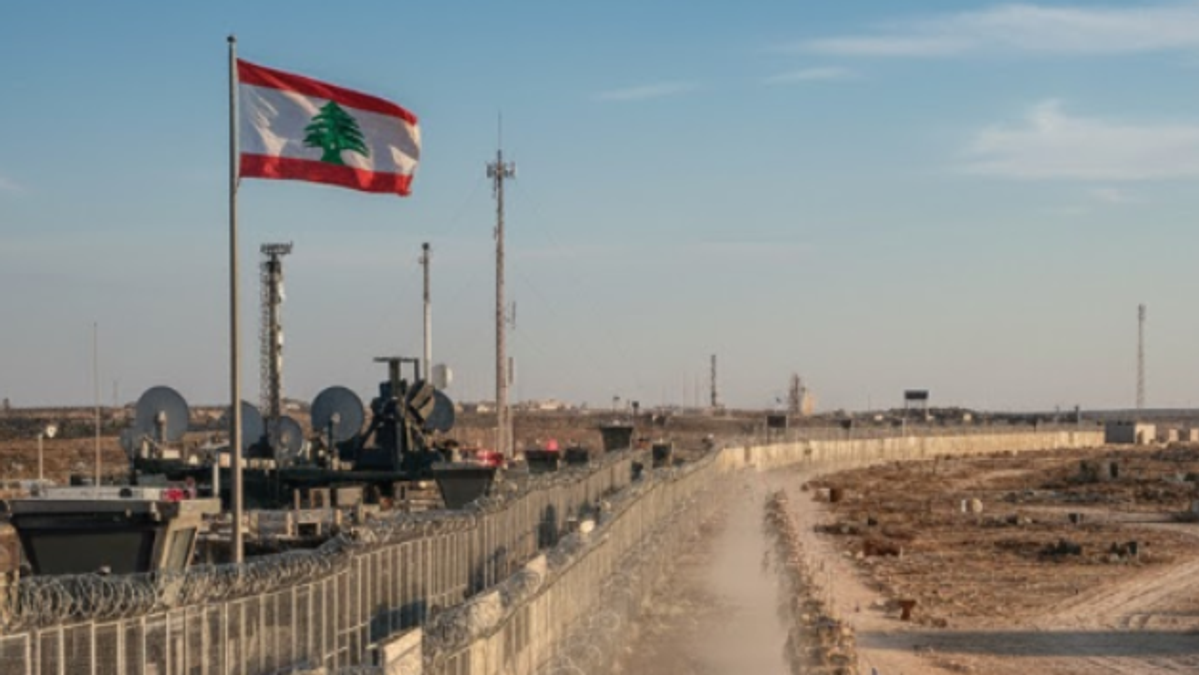
The collapse of the Assad regime has liquidated the strategic “anchor” of the Iranian land bridge. For the United States, Lebanon’s eastern border is no longer a peripheral concern—it is the primary fault line in the containment of the IRGC. A sovereign Lebanon requires a hard, militarized border. Anything less is a direct subsidy to regional instability and the global narcotics trade.
I. The Death of the “Resistance Highway”
For 40 years, the 230-mile border with Syria was a fiction maintained by the Syrian-Iranian axis.
The Strategic Vacuum: With Damascus no longer serving as a regional hub for the IRGC, Hezbollah is scrambling to fortify illicit mountain passes and tunnels.
U.S. Interest: Permanently severing these logistics routes is the most cost-effective way to neutralize Hezbollah's military capability without direct U.S. kinetic involvement.
II. The Captagon Corridor: A U.S. National Security Threat
The Lebanese-Syrian border is the world’s primary artery for Captagon, a trade that funds the “Axis of Resistance” to the tune of $10 billion annually.
Destabilizing Allies: This narco-economy targets U.S. partners in the Gulf and Jordan, fueling domestic instability and funding the next generation of proxy militias.
The “Unit 900” Smuggling Nodes: Hezbollah’s counter-intelligence unit controls the “illegal crossings” that bypass official customs. These are the same routes used to move advanced missile components and IRGC personnel.
III. The LAF Mandate: No More “Strategic Ambiguity”
The Lebanese Armed Forces (LAF) have received millions in U.S. Border Security (Section 1226) funding. The 2026 U.S. policy must be binary:
Physical Control: The LAF must move from “monitoring” to “interdicting.” This includes the destruction of all tunnels and the deployment of U.S.-provided sensors at every mountain pass.
Purging Infiltration: U.S. aid must be immediately suspended if pro-Assad or pro-Hezbollah elements within the LAF continue to provide “safe passage” to militia convoys.
IV. Policy Mandate for U.S. Decision-Makers
1. Militarize the Frontier: Support the construction of a permanent “Security Barrier” along the Eastern border, modeled after the Jordan-Syria border security program.
2. Sanction the Enablers: Apply Treasury sanctions to any Lebanese official—civilian or military—who facilitates the “open border” policy.
3. The Sovereignty Test: Define Lebanese sovereignty by its ability to collect customs at every point of entry. If the state does not control the border, it does not exist.
Conclusion
The fall of Assad has presented Washington with a generational opportunity. By forcing the closure of the “Eastern Breach,” the U.S. can finally end the era of the open-border militia and secure the Eastern Mediterranean.