The Origins of the Banking Crisis
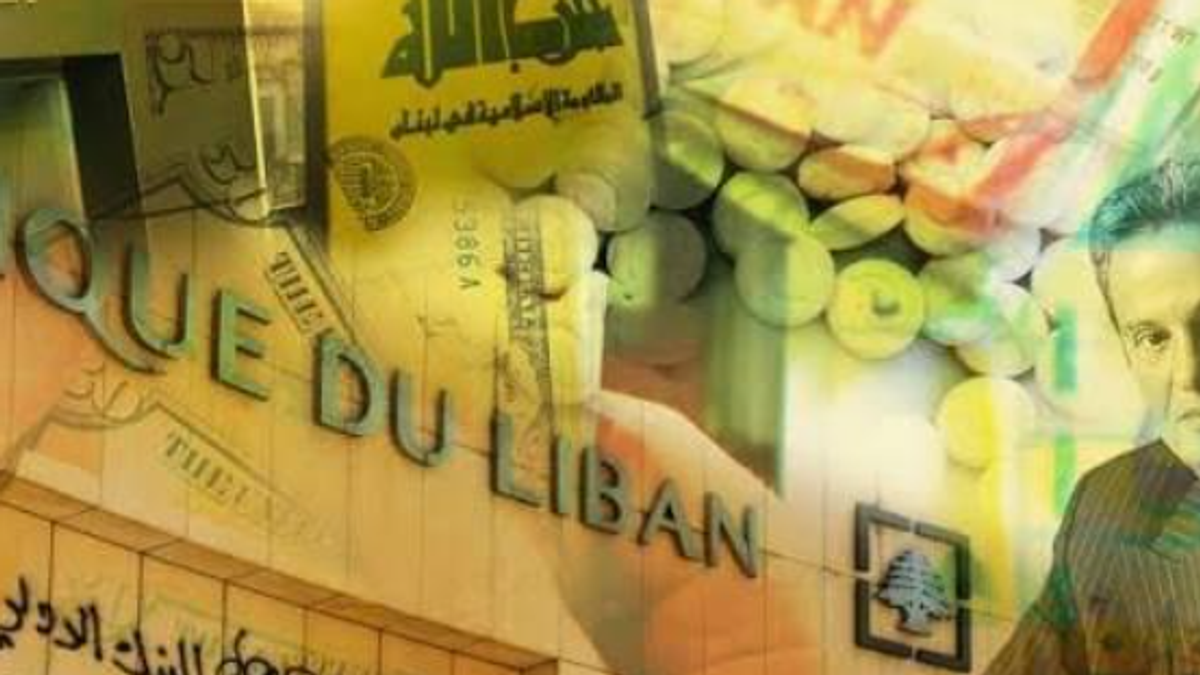
When dollars became scarce in 2019, Lebanese banks restricted access to deposits, including U.S. dollar accounts. The government defaulted on its foreign-currency bonds in 2020, and the Lebanese pound subsequently lost much of its value. Commercial banks had placed substantial funds with Banque du Liban, the central bank, and held government debt. This concentration linked the solvency of the banks to the finances of the state and the central bank. The International Monetary Fund (IMF) traces financial-sector losses to currency depreciation, impaired government debt, troubled private loans, and losses at the central bank.
Hezbollah is an Iran-backed Lebanese political party, armed organization, and provider of social services. It has participated in parliament and government, and it maintains an armed capacity outside the Lebanese military’s chain of command.
The United States designated Hezbollah a Foreign Terrorist Organization in 1997. Its position in Lebanese public life matters for this analysis because decisions by the organization can create financial exposure for people and institutions beyond its own network.
Scope and Evidence
This paper examines documented episodes and policy actions. It uses IMF and World Bank assessments to establish the economic context, Treasury records to identify specific sanctions cases, and Lebanese and international regulatory documents to explain how compliance risk reaches licensed institutions. An administrative designation records the issuing authority’s determination. Estimates of conflict damage, meanwhile, describe the effect of fighting over a stated period. Assigning a share of bank losses or conflict costs to one actor would require evidence that these sources do not provide.
Parallel Finance and Conflict
Al-Qard al-Hassan (AQAH) is a Hezbollah-linked association that provides financial services outside Lebanon’s licensed banking system. U.S. Treasury designated it in 2007 and, in 2021, designated seven individuals connected to Hezbollah or AQAH. Treasury said that six of them had transferred roughly $500 million on AQAH’s behalf using accounts at Lebanese banks. That figure describes transfers cited by Treasury. A measure of losses to banks, depositors, or the central bank would require separate financial records. In July 2025, Banque du Liban issued Basic Circular 170 addressing dealings by regulated entities with unlicensed entities subject to foreign sanctions. The circular establishes a regulatory response. Its effectiveness depends on implementation and supervision.
On October 8, 2023, Hezbollah began firing into northern Israel, saying it was acting in support of Hamas. The fighting escalated, and Israel conducted major military operations in Lebanon in 2024. Article 65 of Lebanon’s Constitution treats war and peace as fundamental decisions of the Council of Ministers and sets a two-thirds approval threshold. That provision clarifies the institutional question raised by an armed party’s decision to open a front. The costs that followed also reflect Israeli military decisions and the subsequent course of the fighting.
For the period from October 8, 2023, through December 20, 2024, the World Bank estimated $14 billion in physical damage and economic losses in Lebanon, including $6.8 billion in damage and $7.2 billion in economic losses. It separately estimated $11 billion in recovery and reconstruction needs. Businesses lost revenue and households lost property and income, weakening their ability to repay loans and increasing demands on public and private financing. The World Bank estimates cover the conflict as a whole. They provide a scale for the recovery challenge, with no allocation of costs by actor.
Sanctions and Access to International Banking
Correspondent banks help Lebanese banks clear dollar payments, process remittances, and finance trade. Sanctions can raise the cost of maintaining those relationships when overseas banks require more documentation, restrict particular transactions, or end a relationship. In 2019, the U.S. Treasury designated Jammal Trust Bank, saying it had knowingly provided financial services to Hezbollah. That case establishes the sanctions exposure of a specific licensed bank. The available evidence does not quantify how much of the wider sector’s difficulty retaining correspondent services arose from Hezbollah-related risk, bank-level compliance failures, financial weakness, or counterparties’ commercial decisions.
The Financial Action Task Force (FATF), the international standard setter for combating money laundering and terrorist financing, placed Lebanon under increased monitoring in October 2024 and retained it there in October 2026. Its action plan covers multiple national deficiencies, including beneficial ownership information, investigations, and targeted financial sanctions. FATF calls for a risk-based approach and does not require enhanced due diligence solely because a country is under increased monitoring. The European Union separately added Lebanon to its high-risk third-country list in 2025, a step that triggers enhanced due diligence under EU rules. These measures have distinct legal effects and address risks across Lebanon’s financial system.
Implications for Lebanon and the United States
Lebanon has two related policy tasks. The government and central bank need to recognize financial losses, establish how those losses will be allocated, and restructure banks so they can again safeguard deposits and extend credit. Supervisors also need to demonstrate that licensed institutions can identify who controls their customers, detect suspicious activity, and enforce applicable restrictions. Effective oversight of nonbank financial activity matters as well. Where households rely on services outside the regulated system, access to affordable, lawful credit and payments should be part of the policy response.
For U.S. policymakers and financial institutions, the practical test is whether targeted enforcement can restrict access for designated actors while preserving lawful channels for remittances, trade, and humanitarian payments. Bank-specific assessment can help maintain those channels where institutions demonstrate effective controls. For Lebanon, credible cabinet authority over decisions of war and peace would address a separate risk to investment and reconstruction. The documented record supports action on each of these fronts. A credible recovery still depends on resolving the financial losses that left depositors unable to access their money.