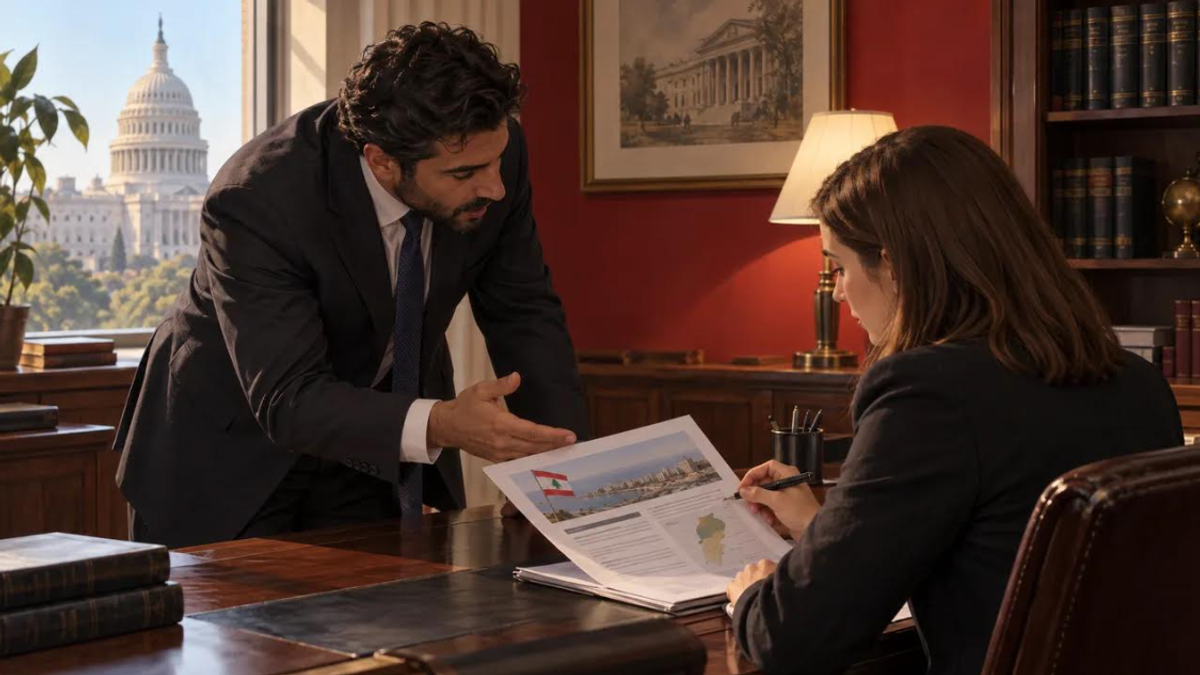
Anti-corruption advocacy that works in Lebanon is organized, evidence-based pressure from civil society and diaspora supporters, aimed at specific institutions and kept up for years. Outrage spikes after every scandal and fades within weeks. Lebanon's harder problem is the gap between a reform passing on paper and an institution doing its job, and only pressure that keeps coming back can close that gap.
Five Tests for a Campaign Worth Backing
Our House of Corruption audit gives the full breakdown of how Lebanon's wealth was stolen, hidden, and lost. Before you give time or money to any campaign against that theft, run the campaign through these tests.
It follows the money abroad. Serious advocates watch foreign enforcement, because much of the paper trail shows up there. On October 16, 2024, the U.S. Treasury's OFAC designated three individuals and four associated companies in a Lebanon-based sanctions evasion network that generates millions of dollars in revenue for Hezbollah (Treasury release). In 2022, three EU countries seized properties and froze assets worth $130m linked to embezzlement of public funds in Lebanon (Al Jazeera report). A good campaign cites actions like these and asks what comes next.
It names an institution and a deadline. Campaigns that only demand arrests tend to stall when a single case does. Ask which body the campaign targets, which appointment it wants filled, and by what date.
Its claims link to records you can open. Every figure should point to a public source and not just a slogan.
It has a route to decision-makers. Research that never reaches a legislator or a ministry stays a report on a shelf.
It still publishes in a quiet month. Check the archive. Steady output between crises is the clearest sign a group will still be there when the next one hits.
How Steady Pressure Turns a Law Into a Working Institution
The law establishing Lebanon's National Anti-Corruption Institution (NACI) was enacted in May 2020, but all six of its members were appointed only in January 2022, according to the United Nations Development Programme. A law with no members cannot investigate anyone. That stretch between enactment and staffing is where advocacy either pays off or evaporates.
Choose one institution whose legal basis already exists, such as NACI, and track it instead of the scandal of the week.
Log each missed milestone with a date and a public source: appointments, budgets, published reports.
Bring that record to people who can act on it, from Lebanese officials to foreign legislators who shape aid and sanctions.
Ask the same question again on a fixed schedule, so that silence becomes news in its own right.
Widen the base of people who sign, call and show up, inside Lebanon and across the diaspora.
An official can wait out one news cycle. A dated, public question that keeps returning costs more each time it comes back. Treat this as civic strategy and not as legal advice: anyone raising a specific case should consult a qualified lawyer.
Where ALEF Fits in This Work
The American Lebanon Education Foundation (ALEF) is an independent, non-partisan movement committed to dismantling corruption, restoring governance, and advocating for Lebanon's sovereignty. Our Research & Policy Reports cover Lebanon's governance, institutions, and economic recovery. We pair that research with a bipartisan US congressional advocacy group, listed on our Lebanon policy advocacy page.
That pairing covers the third step above: it carries a dated record to people with a vote. Our Public Briefings bring the work to civil society, academic institutions, and policymakers. Our Educational Forums cover institutional reform and civic participation. Together these build the wider base that the fifth step depends on.
If you live in the United States, our guide on how Americans can help bring reform maps practical next steps. To commit to the long game with us, start from our ways to get involved or write to contact@usalef.org.
Frequently Asked Questions
Do I need to be Lebanese to support this work?
No. ALEF is explicitly non-partisan and open to citizens of any nationality. Supporters with no family tie to Lebanon bring something useful. They can press their own elected representatives, and those officials may hear the question differently when it comes from a constituent with no personal stake. What counts most is a willingness to stay with one file over time and keep asking the same dated question until it gets an answer.
Why focus on Hezbollah in a fight against corruption?
Armed power and diverted public money reinforce each other, so tracking one leads to the other. ALEF runs a Hezbollah Accountability Initiative campaign. On May 15, 2018, OFAC designated Qasir under E.O. 13224 as a critical conduit for financial disbursements from Iran's IRGC-Qods Force to Hizballah. Designations like this let advocates link one name to a wider financial network and then ask Lebanese institutions what they have done about it.
How can I follow progress without reading everything?
Pick one institution and one milestone, then let others do the scanning for you. ALEF's email newsletter carries critical intelligence and updates. Our Blogs & Articles section publishes geopolitical and economic analysis. Add your chosen milestone to a calendar reminder. When the date passes with no action, that gap gives you a concrete, sourced question to send your representative.
Sources
1. home.treasury.gov
Department of the Treasury’s Office of Foreign Assets Control (OFAC) is designating three individuals and four associated companies involved in a Lebanon-based sanctions evasion network that generates millions of dollars in revenue for Hizballah.
2. UNDP
The law establishing the National Anti-Corruption Institution (NACI) was enacted in May 2020, however, the appointment of all six members of NACI took place in January 2022.
3. Al Jazeera
Three EU countries seize properties and freeze asset worth $130m linked to embezzlement of public funds in Lebanon.