Introduction
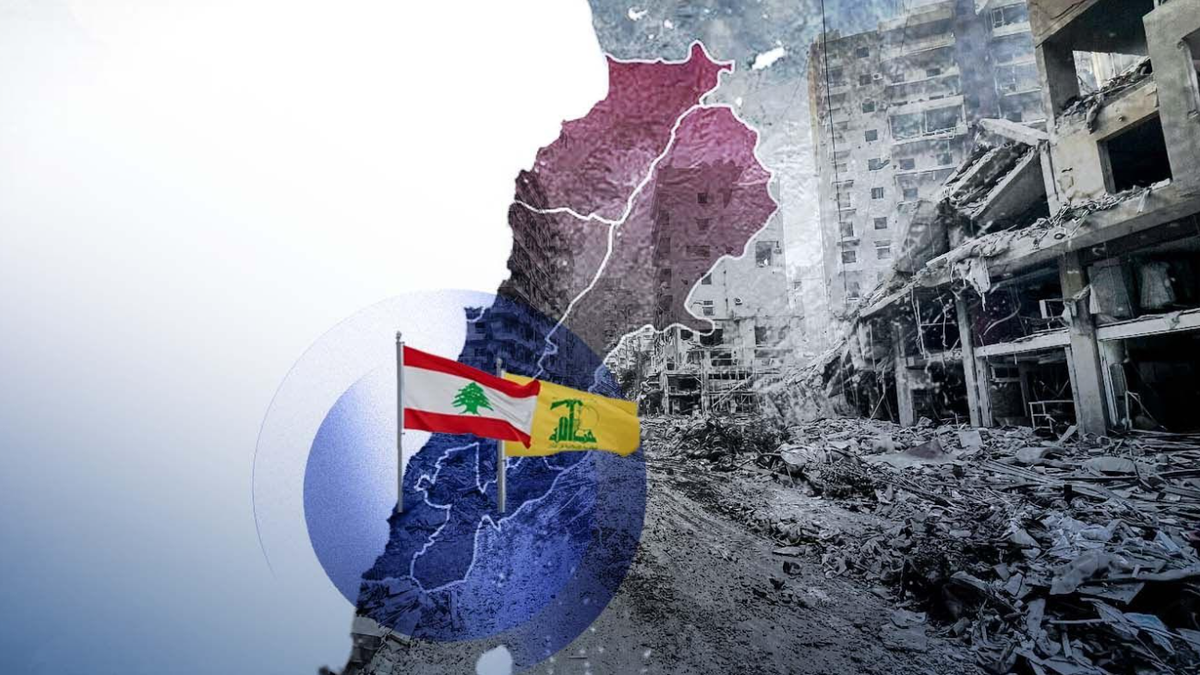
The recent U.S. sanctions targeting individuals linked to Hezbollah, including parliament members, security officials, and political figures, are more than just another routine announcement. While sanctions have traditionally been a tool for the U.S. to counter Hezbollah's financial networks, the latest measures hint at a broader shift in how Lebanon is perceived by the global community.
For years, Lebanon's troubles were seen mainly as economic and financial issues. Conversations centered around sovereign default, banking sector collapse, public debt, governance failures, corruption, and monetary instability. Now, a new perspective is emerging. Lebanon is no longer seen just as a financially troubled state; it's increasingly viewed through the lens of security, geopolitics, sanctions, and financial risks combined.
This shift has significant implications that go beyond those directly targeted by the sanctions.
From Financial Crisis to Integrated Risk Crisis
Lebanon's financial meltdown began as a typical economic crisis. The country defaulted on its Eurobond obligations in March 2020, the banking sector suffered a massive loss of confidence, and the Lebanese pound faced one of the worst currency collapses in recent history.
But crises evolve. What started as a banking and sovereign debt crisis has become entangled with regional developments. The ongoing Israel-Hezbollah tension, escalating U.S.-Iran relations, and growing international worries about governance, sanctions compliance, and anti-money laundering controls have reshaped Lebanon's risk profile. Lebanon is now seen as facing multiple layers of risk: financial, political, security, sanctions, and anti-money laundering and counter-terrorism financing (AML/CFT) risks. The merging of these risks creates challenges far more complex than any single crisis.
Why Financial Markets Care
Financial markets don't wait for official decisions. They react to expectations, perceptions, and future risks. International banks, correspondent institutions, insurers, investors, and trade finance providers continuously assess jurisdictions based on legal, regulatory, operational, and reputational factors. When risk indicators start to converge, these institutions often take a cautious approach.
This is known as de-risking.
De-risking occurs when financial institutions cut back or end business relationships because the perceived compliance and reputational risks outweigh potential benefits. In Lebanon's case, the worry isn't that international banks will abruptly abandon the country. The risk is the gradual buildup of financial friction. This friction might show up as stricter due diligence, slower payment processes, higher compliance costs, tougher onboarding, reduced banking relationships, tighter trade finance, and more scrutiny of cross-border transactions. Each step might seem manageable on its own, but together, they can seriously weaken a fragile economy.
The Informalization Trap
One often overlooked consequence of sanctions-heavy environments is the growth of informality. As access to formal financial channels gets tougher, businesses and individuals naturally look for alternative ways to operate. Cash transactions rise. Informal settlement systems grow. Unregulated financial intermediaries become more appealing. Parallel economic structures emerge.
This creates a dangerous feedback loop. As more economic activity moves outside regulated institutions, international concerns about transparency and financial integrity increase. Higher levels of concern lead to more scrutiny. More scrutiny encourages further de-risking. Further de-risking pushes even more activity into informal channels. The result is a cycle that weakens both financial transparency and state capacity. For Lebanon, already dealing with a large cash economy and significant dollarization, this risk is particularly acute.
The Impact on Reconstruction and Recovery
The effects go beyond banking. Lebanon's future recovery heavily depends on its ability to attract external financing, rebuild infrastructure, restore investor confidence, and reconnect with international capital markets. All these goals become harder when a country is viewed through a security-financial lens.
International donors may become more cautious. Development finance institutions might impose stricter safeguards. Private investors may delay decisions. Reconstruction projects might face more political and compliance barriers. Even if funding is available, accessing it may become slower, costlier, and more conditional. At a time when Lebanon needs substantial investment to rebuild its economy and institutions, this poses a significant strategic challenge.
The Sovereignty Paradox
Ironically, the greatest long-term danger may be institutional rather than financial.
Sanctions and de-risking are often meant to influence behavior and increase accountability. Yet in weak states, they can sometimes have unintended consequences.
As economic activity shifts away from regulated institutions, governments lose oversight of financial flows. Tax collection becomes harder. Regulatory oversight weakens. Informal networks gain power. State authority diminishes. In other words, the very measures meant to put pressure on targeted actors can unintentionally weaken the broader institutional environment. For Lebanon, already grappling with governance, sovereignty, and institutional effectiveness issues, this is a serious concern.
Conclusion
The latest sanctions shouldn't be seen merely as actions against specific individuals. They are part of a broader shift in how Lebanon is viewed globally. The country is increasingly perceived not just as a victim of financial collapse but as a place where financial fragility, geopolitical conflict, sanctions exposure, and security concerns intersect.
This shift matters because international finance reacts to risk perceptions long before formal policies are set.
Lebanon faces a challenge beyond banking reform or fiscal adjustment. It must convince the global community that it remains a credible, transparent, and governable state capable of managing both financial and security risks.
Failing to do so risks creating a cycle where security tensions fuel sanctions, sanctions lead to de-risking, de-risking boosts informality, informality weakens institutions, and institutional weakness draws even greater international scrutiny.
The central question is no longer whether Lebanon can recover from a financial crisis. The question is whether Lebanon can prevent that crisis from becoming a permanent state of geopolitical and financial marginalization.