
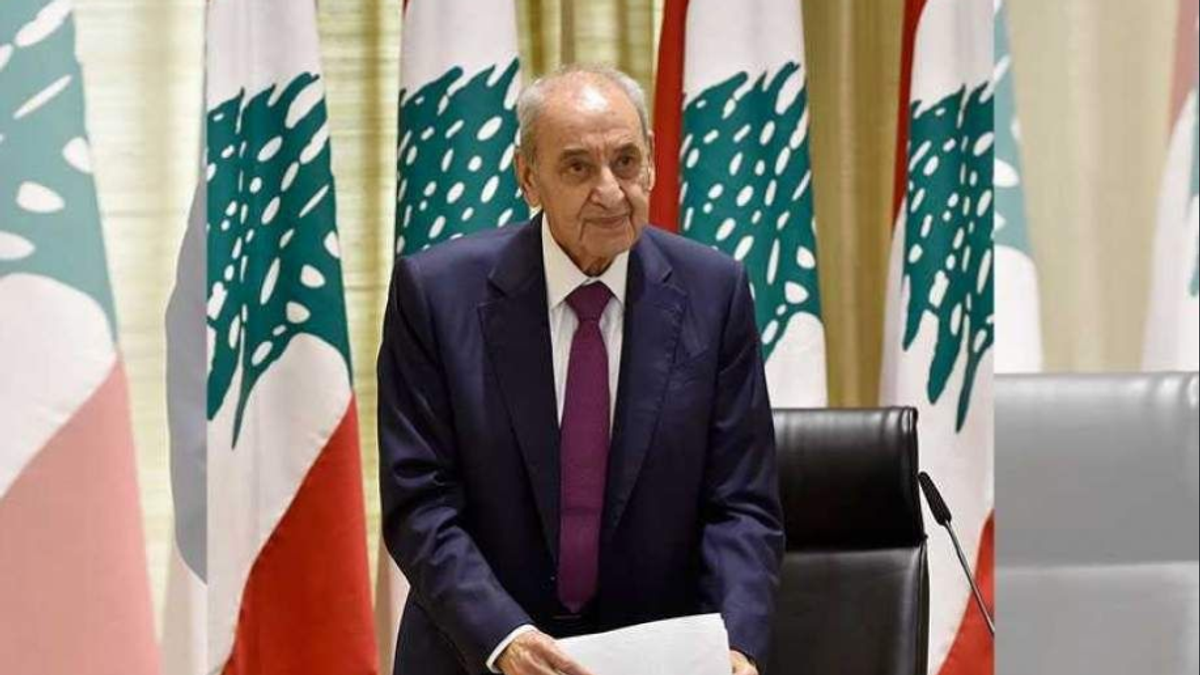
In most democracies, a legislative speaker in power for more than three decades would be an anomaly, if not a scandal. In Lebanon, Nabih Berri’s uninterrupted rule over parliament since 1992 is treated as political furniture—imposing, immovable, and ultimately untouchable. Now aged 87, Berri is more than a political survivor; he is a symbol of the entrenched, unaccountable elite that has overseen Lebanon’s descent into economic ruin, institutional collapse, and international irrelevance.
A lawyer by training and a warlord by origin, Berri rose to prominence during Lebanon’s civil war as head of the Shiite Amal Movement (“Amal”). Though originally a rival to Hezbollah, Berri long ago cemented an alliance with the Iran-backed group, together forming Lebanon’s dominant Shiite bloc. If Hezbollah is the muscle, Amal is the mechanism—the party that manages the state from within, ensuring that key ministries and public contracts remain within loyalist hands.
Today, the two Shiite factions divide influence over Lebanon’s state and society. Amal dominates the state bureaucracy; Hezbollah holds the weapons.
Though Amal claims to be secular and nationalist, Berri’s politics are anything but. For decades, he has cultivated a base in southern Lebanon and the Bekaa Valley, where loyalty is rewarded with public sector jobs and government contracts.
Oversight is nonexistent; transparency, irrelevant. The Berri family’s alleged involvement in skimming public funds and monopolizing local development projects has been a common theme in Lebanon’s media and protest slogans. Transparency, needless to say, is not a family value.
According to a U.S. government source, officials in Washington increasingly view Berri’s unwavering alliance with Hezbollah as a serious impediment to Lebanon’s recovery. With frustration mounting, the Trump administration is now considering targeted sanctions—not only against Berri himself, but also against his family members and closest associates, whose entrenchment in public institutions and business networks is seen as central to the country’s entrenched dysfunction.
Lebanon is now a failed state in everything but name. Its currency has collapsed. Its institutions are hollow. Its elites are richer than ever. And its speaker of parliament—unchanged for 33 years—sits at the very heart of the wreckage. For all the talk of reform, Berri is a reminder that Lebanon’s problem is not just bad policies. It is a political class that has mastered survival while the country beneath them dies.
Nabih Berri will remain speaker not just of Lebanon’s parliament, but of its long, slow death. Until figures like Nabih Berri and the networks they anchor are confronted—rather than celebrated—there can be no real path forward for Lebanon.
Share your thoughts
Brain Expansion Group