This article is the second of a two-part investigative series titled "Lessons Learned." The objective of this series is to analyze definitive historical precedents of state-building, institutional purification, and the systematic dismantling of parallel power structures.
By examining the precise mechanics of how other nations successfully crushed entrenched corruption, liquidated shadow states, and built uncompromised governance models, we establish a realistic blueprint to replicate these structural successes in Lebanon.
When a parallel armed entity achieves complete systemic infiltration, it stops acting purely as an external threat and becomes a component of the state itself. It embeds its agents into local security branches, uses illicit funds to subsidize political campaigns, and relies on an elite political shield to guarantee absolute legal immunity.
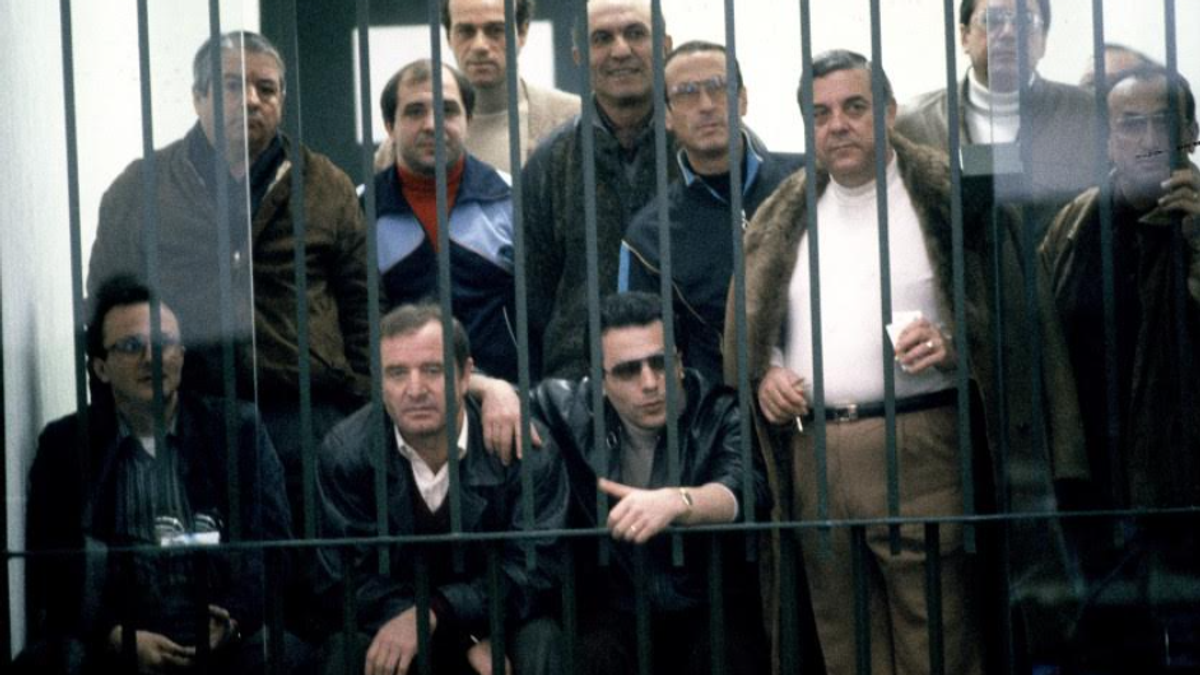
The definitive historical template for severing this symbiotic loop between a parallel armed network and a complicit government is Italy’s offensive against the Sicilian Mafia, culminating in the historic Maxiprocesso (Maxi Trial) of 1986.
The Crisis: The Mafia-State Collusion. For decades, the Sicilian Mafia (Cosa Nostra) operated an absolute shadow state in southern Italy. It maintained a violent monopoly on the streets, managed vast international smuggling pipelines, and extracted a parallel tax system through extortion. This parallel state survived because it was deeply protected by a corrupted national and regional political class—most notably within elements of the long-ruling Christian Democracy party. Local police, judges, and intelligence branches were heavily infiltrated or terrified into compliance. Standard, isolated judicial attempts to stop them failed because the system was engineered to protect the conspirators.
The Blueprint: The Mechanics of the Vetted Pool The Italian system was cracked not by reforming the existing, compromised judicial architecture, but by constructing an uncompromised, parallel operational spearhead inside the state:
• The Anti-Mafia Pool (Pool Antimafia): Bypassing the corrupted local police and judicial hierarchy, uncompromised magistrates—led by Giovanni Falcone and Paolo Borsellino—formed a highly secure, hyper-focused pool of investigators. This unit operated under absolute operational secrecy, sharing information exclusively among themselves to completely eliminate the threat of leaks from infiltrated colleagues.
• The Buscetta Theorem — Systemic Targeting: Instead of treating Mafia crimes as isolated, low-level infractions, Falcone treated the entire parallel structure as a single, unified corporate criminal conspiracy. By flipping top-tier insider Tommaso Buscetta, the pool gained the definitive blueprint of the Mafia’s entire command-and-control structure.
• The Maxiprocesso Hammer: In 1986, the pool bypassed the compromised local courts and launched the Maxi Trial inside a specially constructed, bomb-proof bunker courtroom. The state tried and convicted 338 mafiosi simultaneously, sentencing their top leadership to multiple life terms. This massive, single-cadence strike shattered the myth of the parallel state's invincibility and permanently broke its political protection loop.
The Lesson for Lebanon The Italy case proves that when an entire state apparatus is infiltrated, you cannot rely on conventional, broad-spectrum institutions to clean themselves. A compromised police force or an intimidated judiciary will always stall or leak intelligence to the militia.
To replicate this success, Lebanon’s strategy requires the immediate creation of a hyper-vetted, completely autonomous anti-militia and anti-corruption spearhead—identical to the "vetted units" framework.
This specialized force must bypass the compromised commands of the army and security agencies entirely. It must treat the militia and its complicit political enablers not as legitimate political actors, but as a single, unified criminal conspiracy against the sovereignty of the republic.
By utilizing targeted financial forensics, cutting off their global assets, and prosecuting the network in bulk through uncompromised tribunals, the state can decisively strip the parallel system of its domestic cover.