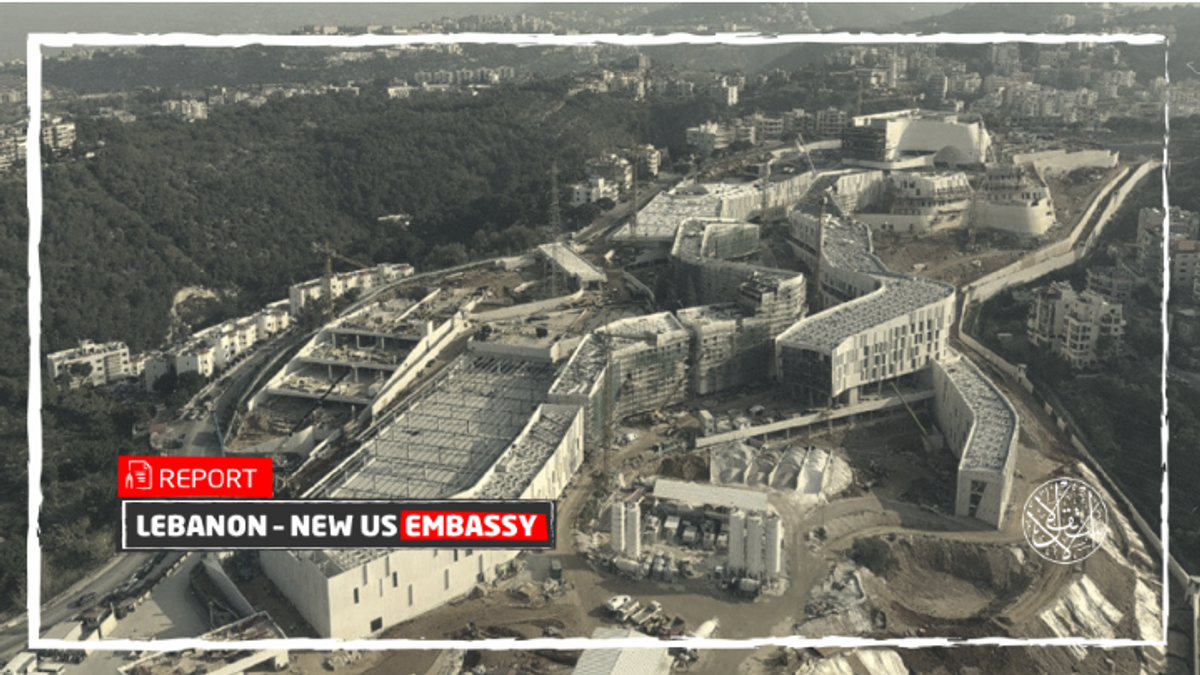
For decades, U.S. policy toward Lebanon was often mischaracterized as a project of democratic altruism or humanitarian stability. However, the 2025 U.S. National Security Strategy (NSS) and recent assessments from the Center for Strategic and International Studies (CSIS) have recalibrated this view, shifting toward a cold-eyed realism: Lebanon is not a charity case; it is a critical geographic and security asset in the containment of Iranian revisionism and the protection of the Eastern Mediterranean.
1. Neutralizing the Iranian Bridgehead
From a strategic standpoint, Lebanon represents the “western front” of the Iranian Revolutionary Guard Corps (IRGC). As noted by The Gold Institute for International Strategy (December 2025), the persistence of Hezbollah’s armed status transforms Lebanon from a sovereign partner into an Iranian forward operating base on the Mediterranean. For the United States, the strategic imperative is no longer merely “managing” this presence but actively facilitating its dismantling. A sovereign Lebanon—defined by the total disarmament of non-state actors—removes Iran’s most potent tool for regional blackmail and significantly lowers the risk of a broader Middle Eastern conflagration that would necessitate direct U.S. military intervention.
2. The Mediterranean “Security Barrier”
Under the current “America First” framework, U.S. interests in the Middle East have pivoted toward building a “virtual security barrier” against the encroachment of Eastern powers, specifically China and Russia. Lebanon’s ports in Beirut and Tripoli are vital nodes in this maritime architecture. A Lebanon controlled by a corrupt, militia-aligned political class invites Russian naval expansion and Chinese predatory infrastructure investment. Conversely, a reformed, pro-Western Lebanon serves as the northern anchor of the expanding Abraham Accords architecture, securing the East Med’s energy corridors and ensuring the free flow of commerce.
3. Ending the “State Erosion” Cycle
Recent policy papers from CSIS (2025) highlight that “state erosion” in Lebanon is a direct threat to U.S. national security. The vacuum created by a hollowed-out Lebanese state is filled by illicit financial networks, narcotics trafficking (notably the Captagon trade), and terrorist logistics. The U.S. interest lies in a “transactional partnership” with the Lebanese Armed Forces (LAF) and new leadership to restore the state's monopoly on force. This is not just about border security; it is about ending the “cash economy” that Hezbollah utilizes to bypass global sanctions, which U.S. Treasury reports estimate funneled over $1 billion in IRGC funds through Lebanese channels in 2025 alone.
Conclusion: Realism Over Rhetoric
The United States is moving away from the “regime change” experiments of the past in favor of hard-nosed deterrence and burden-shifting. For Lebanon to remain relevant to Washington, it must demonstrate utility as a stable, militia-free partner that can secure its own borders. The strategic choice for Lebanon is binary: either it remains a destabilizing Iranian satrap that invites regional war, or it asserts its sovereignty, disarms the militias, and integrates into the new, U.S.-led regional security order. For the American policymaker, the latter is the only outcome that justifies continued strategic investment in the Lebanese state.