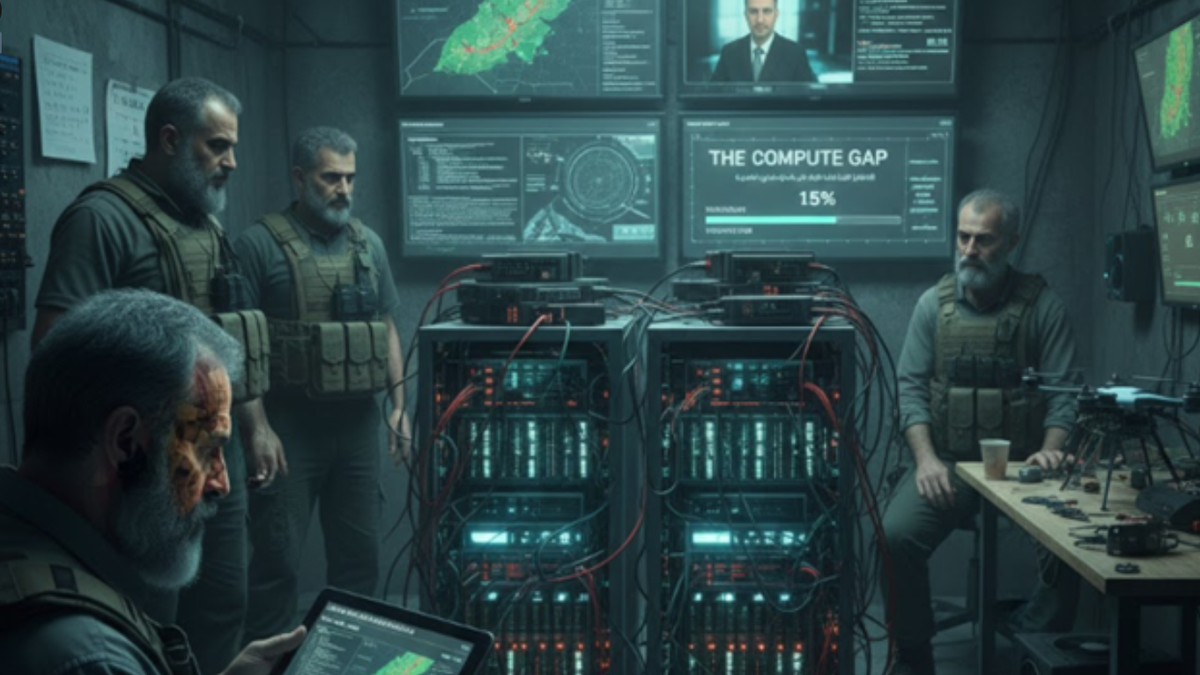
The Silicon Siege is a race against time. If Hezbollah cannot achieve a "Digital Parity" by the end of 2026, its traditional military assets will become nothing more than high-value targets for an adversary that sees the battlefield in high-definition algorithms.
The militia is no longer fighting for territory; it is fighting for the right to remain invisible.
By mid-February 2026, the traditional battlefield of the Levant has shifted from the rocky hills of the South to the digital ether.
Following the catastrophic technological failures of 2024—most notably the "Pager Purge" and the subsequent systematic liquidation of its mid-level command by Israeli AI-driven targeting—Hezbollah authorized a massive, last-ditch modernization of Unit 800. No longer merely a training arm, Unit 800 has been repurposed as the "Digital Jihad Council," tasked with closing the technological gap that threatens the militia's survival.
I. The "Asymmetric Inversion": Why Hardware Isn't Enough
For decades, Hezbollah’s strength was its "invisibility"—blending into civilian infrastructure and using low-tech communications to evade Western signals intelligence (SIGINT).
However, the 2024 conflict introduced "Agentic AI" into the theater. Israeli systems such as Habsora ("The Gospel") and Alchemist reportedly processed vast quantities of data to map the "biological signatures" of militia members, turning routine patterns into targeting intelligence.
Leadership now faces a new strategic reality: a missile without an algorithm may become a liability.
The "Silicon Siege" describes this state of technological encirclement—where predictive modeling anticipates movements before physical engagement begins.
II. The Unit 800 Pivot: From Rifles to Neural Networks
Under IRGC technical supervision, Unit 800 established three "Silicon Hubs" in the Beqaa Valley and within Dahiyeh. Their 2026 mandate includes:
Counter-AI Camouflage
Developing "Digital Noise" generators to mask heat signatures and electronic footprints of Radwan Force units. The strategy involves generating large volumes of synthetic "Ghost Signatures" intended to create sensor saturation through false positives.
Deepfake Deterrence
Deploying AI-generated video and audio to imitate Lebanese state officials and LAF commanders, with the objective of issuing conflicting instructions during operations to create confusion.
The "Swarm" Software
Focusing on domestically assembled UAV systems. The "Ababil-G" software suite is designed to enable autonomous swarm coordination capable of functioning in GPS-denied environments amid electronic warfare conditions.
III. The Global Talent Hunt
With Lebanon’s domestic technology sector weakened, Unit 800 turned to what it calls the "Digital Diaspora."
Through front companies in West Africa and Southeast Asia, software engineers are recruited under the appearance of commercial FinTech ventures. These recruits—often unaware of their ultimate client—contribute to modular code development for autonomous systems.
IV. The Fatal Flaw: The Compute Gap
Despite its ambitions, Hezbollah faces a structural limitation: compute capacity.
Advanced AI systems require significant processing power, including access to high-end semiconductor hardware such as NVIDIA H100 chips or comparable alternatives. International semiconductor restrictions have reportedly forced reliance on distributed computing methods, including compromised civilian infrastructure, to support model training and deployment.