
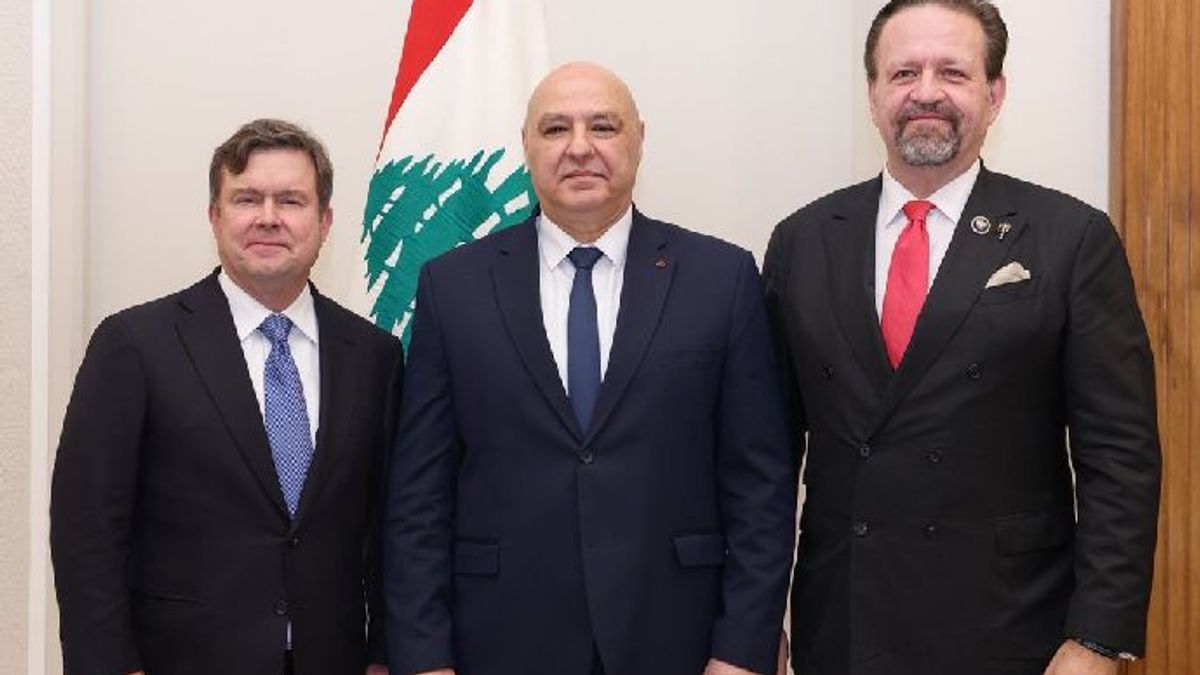
For decades, U.S. policy toward Lebanon has followed the same doomed cycle: polite visits, warm meetings, generous aid packages, and long declarations about reform, sovereignty, and transparency.
In return, Washington receives empty promises, beautifully worded communiqués, and a Lebanese political class that smiles for the camera—before returning to the same corruption, paralysis, and Hezbollah-driven submission that brought the country to collapse.
Lebanon doesn’t need more American compliments; it needs American consequences. And yet, here we are again.
This month’s high-profile visit by a U.S. delegation was an almost perfect illustration of why this cycle keeps failing. On November 9, a group led by Deputy Assistant to the President Dr. Sebastian Gorka, Under Secretary John Hurley, and a small team arrived in Beirut, meeting with Lebanese officials and presenting themselves as agents of a new era of cooperation.
On paper, the delegation came to “listen,” “engage,” and “encourage progress.” These are admirable goals, but they’re meant for a functioning state, which America seems incapable of recognizing does not describe Lebanon.
To anyone familiar with Lebanon’s dynamics, Gorka and Hurley's messages during their last visit to Lebanon is breathtakingly naïve.
President Joseph Aoun of Lebanon is nothing but a powerless idiot not respected by anyone and who does not control the Lebanese state. He does not command the borders. He does not control weapons, ports, security decisions, or strategic posture. He cannot demobilize a single Hezbollah fighter, nor can he block a single Hezbollah convoy. In my personal opinion, he shouldn't even be in power.
To portray him as a man “positioned to realize Middle East peace” is a fantasy because the office he occupies has no real power in a country completely captured by Hezbollah.
If the U.S. wants results, it must invest in what works—not what flatters. And what works is intense pressure followed by action, not praise.
This cycle is not diplomacy. It is enablement.
Lebanon today is bankrupt, lawless, captured by Hezbollah, unable to control its borders, unable to restrain escalation, a model example of state total incompetence and failure. Yet its officials still speak as if they are equal players who can dictate conditions to Washington or Tel Aviv. This arrogance is not strength—it is delusion enabled by years of American softness.
Until the U.S. stops flattering a system controlled by Hezbollah, every trip, every meeting, every handshake, will simply confirm one thing: America still hasn’t learned a thing. And Lebanon is still making a fool of us.
Abide or face obliteration or regime change. That's the only message to be conveyed and should be acted upon starting today. Enough talk, time for action