
When U.S. envoy Tom Barrack stepped out of Baabda Palace on August 18, his message was characteristically upbeat. “The Lebanese government has done their part. Now we need Israel to comply,” he told reporters, casting the country’s recent steps to disarm Hezbollah as a milestone in a long and fragile process. He spoke of “prosperity and peace” and a “roadway to dialogue,” framing the moment as a pivot towards stability.
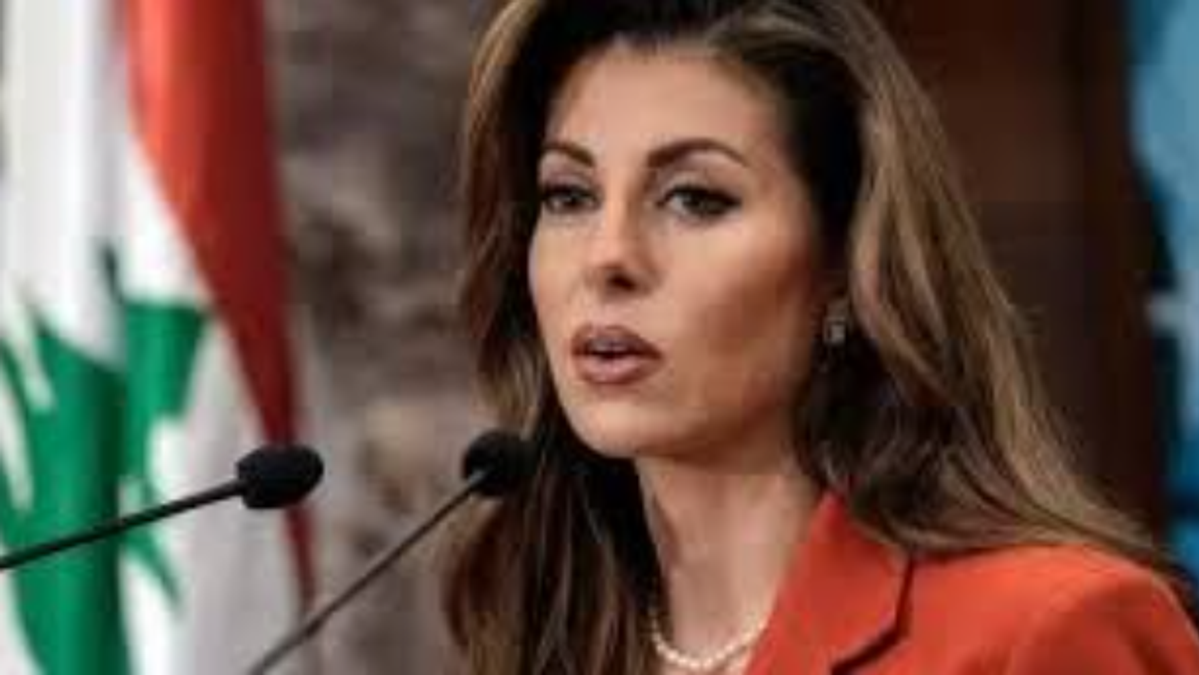
But alongside Barrack stood someone whose presence was more consequential than his optimism revealed: Morgan Ortagus, the Deputy U.S. Envoy for the Middle East, who has quietly rejoined the US diplomatic team for Lebanon under President Trump’s directive.
In the meetings with President Joseph Aoun, Prime Minister Salam, and Speaker Berri, Ortagus sat quietly through most of the formal sessions, letting Barrack take the lead in public. Lebanon’s political class, however, understands that her silence was because she already knows the playbook. She has studied the system, understands the “political theatre” that governs decision-making in Beirut, and has seen how elites manipulate time and process to stall change.
That knowledge is why her return matters. Lebanese leaders thrive on ambiguity and exhausting new envoys with a maze of committees, statements, and staged “dialogue.” Ortagus, though, has already rattled the system once, and her reappearance signals she will do so again.
Ortagus is a balanced contrast with Barrack, whose diplomacy reflects his background as a businessman-turned-envoy. His style is that of deal-making and incremental engagement—the “step-by-step” approach he emphasized again in Beirut.
That is why Ortagus’s return is so important. She restores the edge to U.S. diplomacy, making clear that beneath the talk of prosperity lies a hard line: aid and engagement remain conditional on real steps. Together, the two envoys present a balanced front; Barrack offers reassurance, Ortagus ensures credibility.
Ortagus’s return has been deliberately timed to coincide with the army’s mandate to create a plan to disarm Hezbollah. Washington has put forward an 11-point proposal, including border demarcation with Israel and the phasing out of all non-state arms. These are historic steps, but ones fraught with political resistance.
Lebanon’s political system is designed to resist change. Foreign envoys come and go, often leaving behind little more than photographs and platitudes. What makes Morgan Ortagus different is that she has already broken through once—and now, by presidential directive, she is back to do so again.
She knows exactly how the Lebanese elite play the game. And this time, they know she is watching.
Share your thoughts....