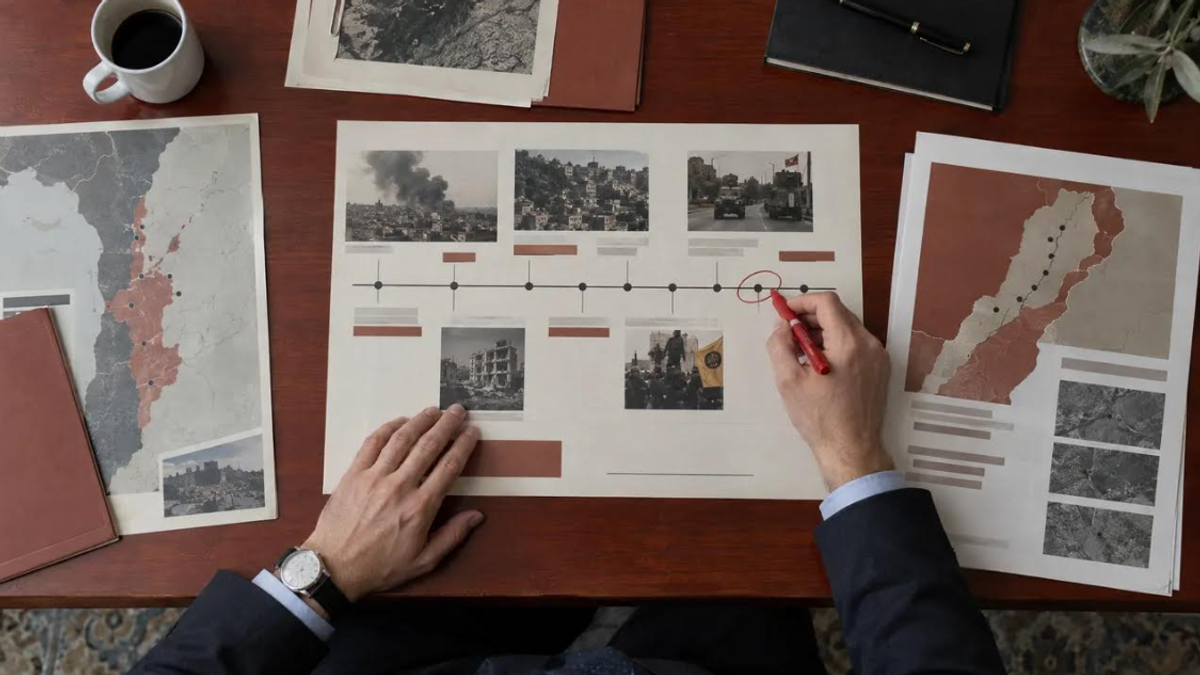
Lebanon Is Not a Reliable US Ally Today
Lebanon is not a reliable US ally today, because the army Washington funds answers to a state where Hezbollah can block the decisions that matter. The useful question is which Lebanese institution the United States is backing, and who holds a veto over it. American money buys a working relationship with an army. It has never bought the government's choices.
How US Support Reaches One Institution, Not the Whole State
The US relationship with Lebanon runs mostly through the military. Since 2006, the United States has invested more than $3 billion in the Lebanese Armed Forces, according to the U.S. Department of State.
The channels are specific. Since 2014, the Department of State has provided Lebanon with nearly $23 million for IMET. [1] From 2016 to 2021, the United States also authorized the permanent export of more than $82 million in defense articles to Lebanon through the Direct Commercial Sales process. [1]
Each of those lines connects Washington to officers, units and equipment. None connects it to the cabinet votes, parliamentary deals and border decisions that set what those units may do. That is the gap. A trained brigade still waits for orders from a political class that Hezbollah helps shape.
We have described this arrangement as democracy bent to serve a dictatorship held up by weapons. Elections happen and ministries open. But the final say on war, peace and security sits with an armed party that answers to no voter.
Why a Capable Army Still Makes an Unreliable Partner
The economic collapse made this worse. In March 2020, the government defaulted on $31 billion in eurobonds, a blow to the country's creditworthiness. [2] We do not call that bad luck or mismanagement. It was engineered theft, and our analysis of how war becomes a shield for looting traces how the plunder happened. A looted state leans harder on outside money, while the same political class keeps its grip.
Parliament is where reform stalls. Our profile of Nabih Berri shows how one gatekeeper can stop change without ever firing a shot.
How Policymakers Can Test the Partnership Before Funding It
These steps reflect ALEF's advocacy position and are offered for information only. This is not legal advice.
Split every aid request into an army file and a state file. Ask what the money does for the military, then ask who can stop that military from using it.
Name the decision-maker who can veto the deployment the aid supports. If the honest answer runs through Hezbollah or its allies, the aid buys capacity that cannot be used.
Tie each tranche to a named reform with a named owner: credible anti-corruption measures, depoliticized state institutions, and independent courts. Who holds control over judicial appointments tells you whether reform is real.
Require transparent governance frameworks that include international monitoring, so progress is checked by someone other than the officials being judged.
Treat Hezbollah's political wing as part of the problem, not a separate partner. A party cannot be both the gatekeeper of reform and its subject.
Track results over years, not news cycles. Advocacy that outlasts the news cycle is the only kind that survives a change of cabinet.
The trade-off is real. Conditions can slow help to soldiers and civilians who are not the problem. We accept that cost because unconditional money has already shown what it buys: a capable army that stays out of the fight that decides Lebanon's future.
What the Aid and Designation Record Shows
Since 2006, the United States has provided more than $5.5 billion in total foreign assistance to Lebanon, according to the State Department's Lebanon country page. That is a heavy, sustained investment in one country.
The enemy side of the ledger is just as old. On October 8, 1997, the U.S. Department of State designated Hezbollah a Foreign Terrorist Organization. The U.S. Treasury designated Hezbollah a Specially Designated Global Terrorist on October 31, 2001, blocking its property subject to U.S. jurisdiction and barring U.S. persons from transactions with it. [3]
Read the two records together and the pattern is plain. For decades Washington has funded the Lebanese state with one hand and sanctioned the group inside it with the other. It has rarely made the first depend on the second. That disconnect, more than any single dollar figure, is why the partnership keeps failing to change outcomes. Our review of US foreign policy toward Lebanon follows how that split has played out.
Where ALEF Pushes for Conditions That Bite
The American Lebanon Education Foundation (ALEF) is an independent, non-partisan movement committed to dismantling corruption, restoring governance, and advocating for Lebanon's sovereignty. Our Research & Policy Reports cover Lebanon's governance, institutions, and economic recovery. ALEF pairs that research with a Congressional Advocacy Group listing bipartisan US Congress supporters.
Our position is direct: Hezbollah's military and political wings should both be listed as terrorist organizations. Our Hezbollah Accountability Initiative campaign carries that position. It treats the problem as the whole system around Hezbollah, not just its weapons.
We hold Public Briefings for civil society, academic institutions, and policymakers. ALEF is explicitly non-partisan and open to citizens of any nationality. Our email newsletter carries critical intelligence and updates, and our guide to ways Americans can push for reform turns this argument into action.
If you work on Lebanon policy and want a briefing, reach us through our contact page or at contact@usalef.org.
Frequently Asked Questions
Are America and Lebanon allies?
They are partners on paper and in practice through the army, but not allies in the sense that matters. An ally can commit to shared goals and follow through. Lebanon's government cannot commit against Hezbollah without that group's consent, so any pledge it makes has a ceiling. The fair description is a conditional partnership with one institution, the military, inside a state whose political direction Washington does not control. That is why ALEF argues the relationship should be priced by reforms delivered, not by goodwill expressed.
Is Lebanon friendly to Americans?
Separate the people from the power structure. Lebanese citizens, and the large diaspora that keeps family and business ties abroad, are not the same as Hezbollah, and treating them as one hands the group a story it wants. The state is another matter, because its security choices are shaped by a group the United States has sanctioned. Anyone planning travel should check current official US government guidance first, since conditions can change quickly and differ by region.
What countries are not allies with the US?
There is no single official list, because "ally" covers formal treaty commitments, informal partnerships and everything between. A clearer test is to ask whether a government can freely cooperate with Washington on security when it chooses to. Some states oppose US goals outright. Lebanon sits in an odd middle: its government is not an enemy, but a designated terrorist group inside it can block that cooperation. That is a different problem from hostility, and it calls for a different tool: conditions, not isolation.
Sources
1. United States Department of State
Since 2006, U.S. investments of more than $3 billion to the LAF enabled the Lebanese military to be a stabilizing force against regional threats.
2. U.S. Department of State, Lebanon country page
Since 2006, the United States has provided more than $5.5 billion in total foreign assistance to Lebanon.
3. U.S. Department of State Rewards for Justice, "Hizballah"
Department of the Treasury designated Hizballah as a Specially Designated Global Terrorist pursuant to Executive Order 13224, as amended. As a result, all of Hizballah’s property, and interests in property, subject to U.S. jurisdiction are blocked, and U.S.